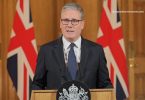
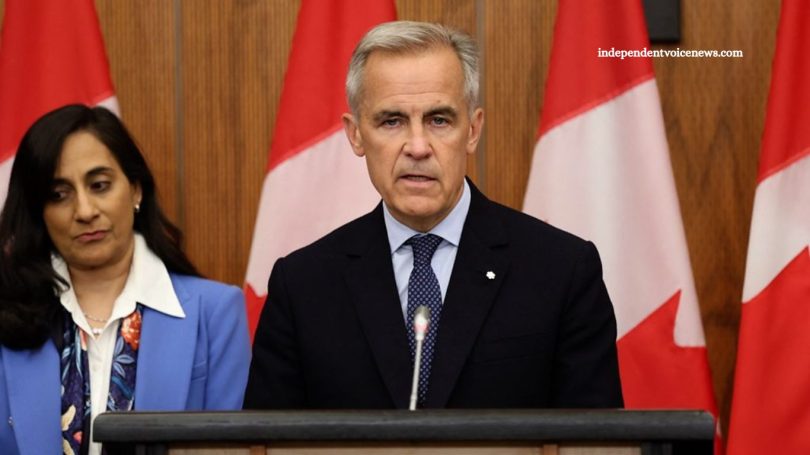

In a landmark announcement, Prime Minister Mark Carney declared that Canada plans to formally recognize the State of Palestine at the United Nations General Assembly in September 2025. This move follows closely behind similar declarations by France and the United Kingdom, positioning Canada as the third G7 nation to embrace Palestinian statehood in a matter of days.
Carney’s declaration marks a significant pivot in Canadian foreign policy and underscores growing international momentum toward addressing the Israel-Palestine conflict through diplomatic recognition of a Palestinian state. The decision, however, comes with clear conditions: the Palestinian Authority (PA) must commit to democratic reforms and hold national elections—excluding Hamas participation—in the near future.
A Shift from Tradition to Action
Canada has traditionally supported a two-state solution as the path to lasting peace in the Middle East. Yet, according to Carney, recent developments have rendered the status quo untenable. Speaking to reporters in Ottawa, he cited a series of escalating crises that prompted the decision.
“The expansion of Israeli settlements, the deepening humanitarian catastrophe in Gaza, and the continuing violence since the October 7 attacks make it impossible to maintain a passive approach,” Carney stated.
He added that the time for conditional support has passed and that formal recognition, paired with clear expectations for reform, is the only viable path forward. “The prospect of a Palestinian state is being eroded before our eyes,” he said.
Read More: Russian Airstrikes Kill 25 in Ukraine; Trump Sets Deadline for Peace Talks
Recognition Tied to Reforms
Despite the bold step, Carney emphasized that recognition is not without strings attached. The Palestinian Authority must embark on substantial reforms, including transparent elections and the demilitarization of the territories it governs.
Carney underscored the necessity of excluding Hamas—a group designated as a terrorist organization by Canada and many Western countries—from any future Palestinian government structure. The PA, led by Mahmoud Abbas through the Fatah party, currently governs parts of the West Bank but has not held national elections since 2006.
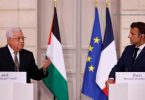
“I spoke directly with President Mahmoud Abbas today,” Carney revealed during the press briefing. “We agreed on the urgency of moving forward with democratic processes that can unite and represent all Palestinians legitimately.”
International Momentum Builds
Carney’s announcement comes just one day after the United Kingdom revealed plans to recognize a Palestinian state in September, should Israel fail to meet ceasefire conditions. A week earlier, France declared a similar intent. With Canada joining these European allies, the geopolitical landscape is rapidly shifting.
Currently, 147 of the 193 United Nations member states recognize Palestinian statehood. If these plans proceed, the United States will remain the only permanent member of the UN Security Council not to do so.
Israel Responds with Outrage
Israel swiftly condemned Canada’s decision. The Israeli Ministry of Foreign Affairs issued a sharp rebuke, describing the move as “a reward for Hamas” and claiming it undermines efforts to secure a ceasefire in Gaza and negotiate the release of hostages still held by militant groups.
“Recognizing a Palestinian state in the aftermath of October 7 sends the wrong message,” the ministry posted on X, formerly Twitter. “It harms the delicate progress being made toward peace and emboldens extremists.”
Israel has maintained that formal recognition should only come through direct negotiations between the parties, not through unilateral or multilateral actions.
Domestic Reactions Mixed
Back home, the announcement sparked mixed reactions across Canada’s political spectrum. The Conservative Party, the country’s official opposition, criticized the move as poorly timed and diplomatically irresponsible.
“Recognizing a Palestinian state immediately after the October 7 terrorist atrocities risks rewarding violence and sends a troubling message to our allies,” the party said in a statement.
Yet Carney’s decision also received strong backing from segments of civil society. A letter signed by nearly 200 former Canadian diplomats urged the government to recognize a Palestinian state as a matter of moral clarity and international responsibility.
“Our nation’s values are being undermined daily by the ongoing displacement, indiscriminate attacks, and systemic deprivation faced by Palestinian civilians in Gaza and the West Bank,” the letter read.
Carney: Decision is Canada’s Alone
When asked whether Canada’s policy shift was influenced by the UK and France or coordinated with U.S. President Donald Trump, Carney firmly rejected the notion.
“Canada makes its own foreign policy decisions,” he said. “We are aligned with democratic principles, not dictated by them.”
Carney also emphasized that the move aims to restore hope for a long-dormant peace process, one that appears increasingly out of reach as the situation on the ground deteriorates.
“This is not about politics,” Carney said. “It’s about restoring the dignity of millions of Palestinians while promoting a future where both Palestinians and Israelis can live in peace and security.”
The October 7 Attack and Its Aftermath
On October 7, 2023, Hamas militants launched a surprise attack on southern Israel, killing approximately 1,200 people and taking 251 hostages. In response, the Israeli military began a prolonged offensive in Gaza, resulting in widespread destruction and a spiraling humanitarian crisis.
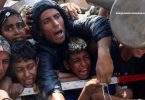
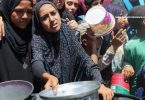
According to Gaza’s Hamas-run Health Ministry, over 60,000 people have been killed since the onset of Israel’s military campaign. Among them, at least 154 individuals—including 89 children—have died from malnutrition-related causes. The United Nations and humanitarian agencies have repeatedly called for an immediate ceasefire and increased access to humanitarian aid.
Carney highlighted these figures as part of the rationale for Canada’s policy reversal. “The level of human suffering in Gaza is intolerable and rapidly worsening,” he said. “We cannot turn a blind eye to this any longer.”
What Recognition Means for the Peace Process
The recognition of Palestinian statehood by a G7 country such as Canada is a diplomatic milestone. While largely symbolic in terms of immediate political change, it carries significant implications for international legitimacy and future negotiations.
Experts suggest that Canada’s move, especially in conjunction with France and the UK, acts as a diplomatic lever—or “crowbar,” as some commentators put it—to revive the stagnant peace process.
“This step is aimed at creating momentum,” said a Middle East policy analyst at the University of Toronto. “It shows that global patience is wearing thin with the current impasse.”
Potential Consequences and Next Steps
Canada’s recognition could accelerate similar moves by other Western democracies and middle powers. It may also put additional pressure on the United States, which has long resisted unilateral recognition efforts in favor of a negotiated settlement.
For the Palestinian Authority, the recognition offers both an opportunity and a challenge. Democratic reform and credible governance will be essential to maintaining international support. Without elections or meaningful progress, recognition risks becoming a hollow gesture.
At the same time, Israel is likely to intensify lobbying efforts to dissuade additional nations from following suit, especially those within the European Union and other G7 members.
A Turning Point in Global Diplomacy?
As September approaches, the world will be watching the UN General Assembly closely. Canada’s announcement adds another layer of complexity to an already volatile issue, but it may also open a window—however narrow—for renewed diplomacy and dialogue.
“Recognizing Palestine isn’t the end of the process,” Carney concluded. “It’s a beginning. A beginning rooted in human rights, accountability, and the belief that peace is possible.”
Frequently Asked Questions
What has Canada announced regarding Palestinian statehood?
Prime Minister Mark Carney announced that Canada will formally recognize the State of Palestine in September 2025, during the UN General Assembly, provided certain conditions are met, including governance reforms by the Palestinian Authority.
How has Israel responded to Canada’s announcement?
Israel’s Ministry of Foreign Affairs condemned the move, calling it a “reward for Hamas” and arguing that it undermines efforts to reach a ceasefire and negotiate the release of hostages in Gaza.
Is this decision aligned with Canada’s traditional foreign policy?
While Canada has long supported a two-state solution, this marks a shift from a negotiation-based approach to a more assertive stance on recognition due to lack of progress and worsening conditions.
Has Canada coordinated this move with the United States?
According to Carney, Canada makes independent foreign policy decisions. He stated that the announcement was not made in coordination with the U.S. or influenced by allied actions, though the timing aligns with those of the UK and France.
What happens next?
If the Palestinian Authority meets Canada’s conditions, the country will issue formal recognition at the UN General Assembly in September 2025. The situation remains fluid, and developments in the region could impact this timeline.
Conclusion
Canada’s decision to recognize the State of Palestine marks a pivotal moment in its foreign policy and reflects a growing international shift toward renewed diplomatic engagement in the Israeli-Palestinian conflict. By aligning with allies like France and the United Kingdom, Canada is signaling that the time for passive support of a two-state solution is over—and that meaningful action is now required to revive hopes for peace.
While the recognition is contingent on democratic reforms and the exclusion of Hamas from governance, the move underscores mounting global frustration over the humanitarian crisis in Gaza, the lack of political progress, and the continued expansion of Israeli settlements.