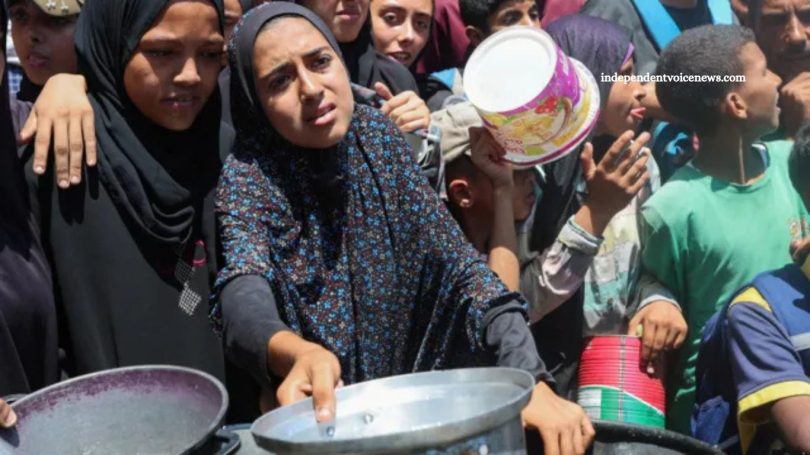

The United Nations World Food Programme (WFP) has issued a grave warning: nearly one in three people in Gaza are going for days without food. The alarming revelation underscores a worsening humanitarian crisis in the region, where widespread malnutrition is escalating at an unprecedented rate.
According to the WFP, approximately 90,000 women and children in Gaza now urgently require treatment for severe malnutrition. The agency emphasized that the situation is deteriorating rapidly, with starvation-related deaths mounting across the besieged territory.
Surging Death Toll from Malnutrition
The Hamas-run health ministry in Gaza reported that nine more people died from malnutrition-related causes last Friday, raising the total number of such deaths since the outbreak of war to 122. Aid groups and international agencies fear that this number could rise significantly in the coming weeks if immediate action is not taken.
While humanitarian organizations raise the alarm, Israeli authorities maintain that no restrictions are being placed on the delivery of aid into Gaza. Instead, they accuse Hamas of obstructing the flow and distribution of supplies. An Israeli security official stated that airdrops of humanitarian aid could be approved soon, although aid agencies argue that airdrops are a highly inefficient method for reaching those in need.
Local media suggested that the United Arab Emirates and Jordan were preparing for such airdrops. However, a senior Jordanian official told the BBC that its military had not yet received clearance from Israeli authorities to proceed.
The UN criticized the proposed airdrops as a “distraction from inaction” by the Israeli government, stating that the urgent need is not symbolic gestures but sustained and unrestricted access for ground-based humanitarian aid.
Read More: Macron Announces France Will Recognize Palestinian State
Mounting International Pressure
Global concern over the humanitarian situation in Gaza is intensifying. On Friday, the governments of Germany, France, and the United Kingdom jointly urged Israel to lift all restrictions on aid delivery. Their joint statement called for an immediate end to what they described as a “humanitarian catastrophe” and demanded Israel fulfill its obligations under international humanitarian law.
“Withholding essential humanitarian assistance to the civilian population is unacceptable,” the statement read.
UN Secretary-General António Guterres expressed deep frustration over what he called a disturbing lack of action from the global community. Speaking at the Amnesty International Global Assembly, Guterres remarked, “I cannot explain the level of indifference and inaction we see by too many in the international community—the lack of compassion, the lack of truth, the lack of humanity.”
Guterres also highlighted that over 1,000 Palestinians have been killed since late May while attempting to access food supplies, many of which were provided through the US- and Israeli-backed Gaza Humanitarian Foundation (GHF), which was set up as an alternative to the traditional UN-led aid system.
Allegations of War Crimes at Food Distribution Sites
Further controversy surrounds recent claims by a former US security contractor who worked with the GHF. Anthony Aguilar, a retired soldier, told the BBC he had personally witnessed war crimes committed during food distribution efforts in Gaza between May and June 2025.
According to Aguilar, Israeli forces and US contractors used live ammunition, tank fire, and mortar rounds against civilians attempting to collect food. “In my entire career, I have never seen this level of brutality and indiscriminate force used against civilians,” Aguilar said.
The GHF has since dismissed the allegations, describing Aguilar as a “disgruntled former contractor who was terminated for misconduct.” The organization insisted the claims are “categorically false.”
Stalled Ceasefire Talks and Political Tensions
Efforts to broker a new ceasefire and secure the release of hostages have faltered. The US and Israeli negotiation teams recently withdrew from talks in Qatar, casting doubt on the possibility of an imminent resolution.
US President Donald Trump commented that Hamas “didn’t really want to make a deal,” further fueling diplomatic tensions. A senior Hamas representative refuted these claims, stating that negotiations had not collapsed and that Israel’s delegation was expected to return to Doha soon.
The ongoing conflict was triggered by the Hamas-led attack on southern Israel on October 7, 2023, in which approximately 1,200 Israelis were killed and 251 taken hostage. In response, Israel launched a full-scale military offensive in Gaza, which has since led to more than 59,000 Palestinian deaths, according to Gaza’s health ministry.
Humanitarian Collapse and Infrastructure Devastation
Following a total blockade imposed by Israel in March, Gaza’s humanitarian conditions have deteriorated sharply. Though the blockade was partially eased under global pressure, access to food, clean water, medicine, and fuel remains critically limited.
UN agencies and humanitarian experts have warned that Gaza is now on the brink of famine. Most of the territory’s population has been displaced multiple times, and over 90% of homes are believed to be damaged or destroyed.
Shelters are overcrowded, hospitals are struggling without electricity or medical supplies, and essential infrastructure is in ruins. As the humanitarian crisis deepens, so does the desperation of the population.
A recent BBC interview with a mother of a malnourished child in Gaza paints a bleak picture. “I’m so tired,” she said, cradling her infant. “There is no food, no milk, no future for my baby.”
Growing Global Momentum for Palestinian Statehood
In a significant political development, France announced on Thursday that it will officially recognize a Palestinian state in September, prompting swift condemnation from Israel and its allies. The following day, over one-third of UK Members of Parliament signed a letter urging Prime Minister Keir Starmer to take similar action.
However, Starmer signaled that the UK would not recognize Palestinian statehood immediately, saying such a move must be part of a broader strategy that results in a lasting two-state solution.
As diplomatic pressure builds and humanitarian conditions continue to unravel, calls for an immediate ceasefire and comprehensive international intervention are growing louder.
Frequently Asked Questions
What did the UN say about the food crisis in Gaza?
The UN World Food Programme (WFP) reported that nearly one in three people in Gaza are going for days without food. It warned that the humanitarian crisis is escalating, with tens of thousands of women and children in urgent need of malnutrition treatment.
How many people in Gaza are affected by malnutrition?
According to the WFP, approximately 90,000 women and children in Gaza require immediate treatment for malnutrition. The numbers are expected to grow as food shortages worsen.
What is causing the food crisis in Gaza?
The food crisis is primarily due to restricted humanitarian aid access, ongoing conflict, and repeated displacements. Although Israel claims there are no barriers to aid, international organizations say access and distribution remain severely limited.
How many people have died due to malnutrition in Gaza?
As of the latest reports, 122 people have died from malnutrition-related causes since the war began, according to Gaza’s health ministry. The number continues to rise amid worsening conditions.
Is humanitarian aid reaching Gaza?
Aid is reaching Gaza in limited amounts, but not nearly enough to meet the overwhelming need. Airdrops are being considered, though aid agencies warn this method is inefficient. Ground access remains critical for effective distribution.
Who is responsible for the food shortages in Gaza?
Responsibility is widely debated. Israel claims Hamas is blocking or mismanaging aid. Meanwhile, the UN and humanitarian groups point to Israeli-imposed restrictions as the main barrier to consistent aid flow.
What has been the international response?
Countries including Germany, France, and the UK have urged Israel to lift restrictions on aid. The UN Secretary-General condemned the global community’s “indifference” and called for immediate humanitarian access.
Conclusion
The alarming warning from the UN that nearly one-third of Gaza’s population is enduring days without food highlights a deepening humanitarian catastrophe. With malnutrition rising, especially among women and children, and critical shortages of food, medicine, and basic necessities, the situation demands immediate international action.
Despite political disputes over responsibility, the reality on the ground remains clear: civilians are suffering, and lives are being lost to hunger. Global leaders, humanitarian agencies, and governments must urgently work together to ensure safe, consistent access to aid and push for a lasting ceasefire.