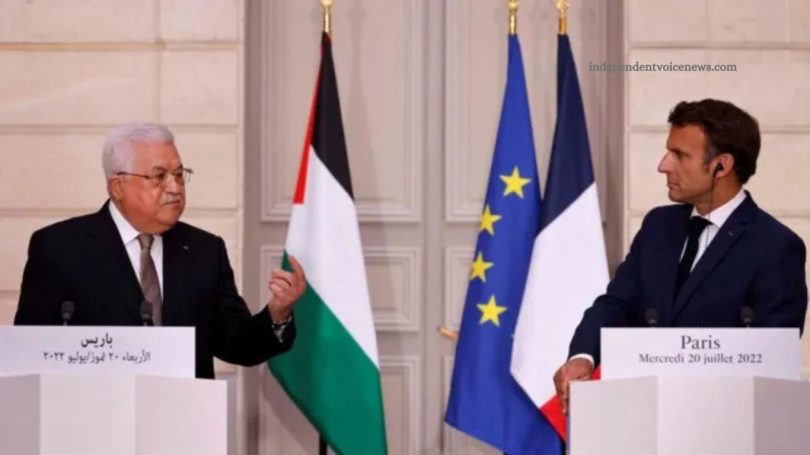

A landmark foreign policy shift, French President Emmanuel Macron announced that France will officially recognize the State of Palestine in September. The formal declaration is expected to be made during the upcoming session of the United Nations General Assembly in New York, marking a pivotal moment in international diplomacy and the Middle East peace process.
President Macron’s announcement was made via a statement on X (formerly Twitter), emphasizing France’s commitment to a just and lasting peace in the region. His words signal a strong stance on the ongoing humanitarian crisis in Gaza and France’s evolving role in addressing it.
Macron’s Statement: A Pledge Toward Peace
“The urgent need today is for the war in Gaza to end and for the civilian population to be rescued. Peace is possible,” Macron posted. “We need an immediate ceasefire, the release of all hostages, and massive humanitarian aid to the people of Gaza.”
The French leader also underscored the necessity for both security and statehood in the region. He reiterated France’s support for a two-state solution that ensures both the demilitarization of Hamas and the establishment of a viable, sovereign Palestinian state that recognizes Israel.
“True to its historic commitment to a just and lasting peace in the Middle East, I have decided that France will recognize the State of Palestine,” Macron wrote. “There is no alternative.”
He further attached a formal letter to Palestinian Authority President Mahmoud Abbas, confirming France’s decision and pledging support for Palestinian self-determination.
Read More: Mass Starvation Spreads in Gaza: International Aid Groups Urge Urgent Action
Global Reactions: Applause and Condemnation
The announcement sparked strong international reactions, with Palestinian leaders hailing France’s decision and Israel sharply criticizing it.
Palestinian Authority: A Step Toward Justice
Hussein al-Sheikh, a senior official with the Palestinian Authority, welcomed the move, describing it as a reaffirmation of international law and Palestinian rights.
“This position reflects France’s commitment to international law and its support for the Palestinian people’s rights to self-determination and the establishment of our independent state,” al-Sheikh told AFP.
Hamas: Encouraging Global Recognition
Hamas, the Islamist group that governs Gaza, called France’s announcement a “positive step in the right direction” and encouraged other countries to follow suit. The group has long sought international recognition of Palestinian statehood, despite being labeled a terrorist organization by the US, EU, and others.
Israel: A Diplomatic Fallout
Israeli Prime Minister Benjamin Netanyahu responded with fierce criticism, warning that the recognition of Palestine in the current context “rewards terror” and poses a direct threat to Israel’s existence.
“A Palestinian state in these conditions would be a launch pad to annihilate Israel – not to live in peace beside it,” Netanyahu wrote on X. “The Palestinians do not seek a state alongside Israel; they seek a state instead of Israel.”
Netanyahu’s response reflects longstanding Israeli concerns that statehood for Palestine without stringent conditions, including full demilitarization and the disbanding of groups like Hamas, would jeopardize regional security.
Widening Global Support for Palestinian Statehood
France joins a growing list of countries that have formally recognized Palestine as a state. To date, more than 140 of the 193 UN member states acknowledge Palestinian statehood. Among European Union members, Spain and Ireland have recently joined the list, adding momentum to the international movement.
Saudi Arabia Welcomes France’s Decision
The Saudi Ministry of Foreign Affairs praised Macron’s announcement, stating it reflects “the international community’s consensus on the Palestinian people’s right to self-determination and the establishment of an independent state.”
The Saudi government has been vocal in recent years about its support for a two-state solution, often urging stronger action from global powers to bring peace to the region.
United Kingdom’s Response: A Call for Urgent Dialogue
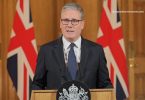
Newly appointed UK Prime Minister Sir Keir Starmer issued a statement calling for an emergency meeting with French and German leaders to discuss immediate steps to stop the bloodshed in Gaza.
“Statehood is an inalienable right of the Palestinian people,” Starmer said. “A ceasefire would put us on a path to the recognition of a Palestinian state and a two-state solution.”
Starmer’s comments suggest the UK may be reassessing its long-held position, aligning more closely with European partners pushing for peace and recognition.
The Humanitarian Crisis in Gaza
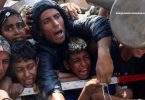
Macron’s statement comes amid escalating humanitarian concerns in Gaza, where ongoing conflict has left tens of thousands dead and the territory in ruins.
Since Israel launched its military campaign in response to the October 7, 2023 attack by Hamas, Gaza has witnessed unprecedented devastation. According to Gaza’s Ministry of Health, over 59,000 people have been killed, with thousands more wounded or missing.
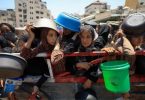
Much of Gaza’s infrastructure has been destroyed, leaving large swaths of the population without access to clean water, electricity, or medical care. The city lies in near-total ruin, with aid organizations warning of an impending famine.
UN Agencies and Aid Groups Sound the Alarm
The United Nations Relief and Works Agency (UNRWA) released a grim report on Thursday, stating that one in five children in Gaza City is now malnourished, with cases growing by the day. The agency has repeatedly called for increased humanitarian access and international intervention.
More than 100 global humanitarian organizations, including Médecins Sans Frontières, Save the Children, and Oxfam, have echoed those concerns, warning of mass starvation and urging nations to take bold diplomatic action to force a ceasefire and open aid corridors.
Political Context: A Historic Shift in French Diplomacy
France has historically played a central role in Middle East diplomacy, often balancing its alliances with Western partners and Arab nations. Macron’s decision to formally recognize Palestine signals a major evolution in French foreign policy.
While France has long supported a two-state solution, it has until now refrained from recognizing Palestinian statehood unilaterally. Macron’s statement marks a decisive step, one that may influence other European nations to follow suit.
In previous years, similar proposals in the French parliament were met with hesitation from the executive branch. But the escalating violence in Gaza, international pressure, and the shifting political landscape in Europe have pushed France to act.
Looking Ahead: What Macron’s Move Could Mean
The formal recognition of Palestine by a major Western power like France could reshape international diplomacy. It places pressure on allies, particularly the United States and the United Kingdom, to reconsider their positions.
For Palestinians, France’s recognition could bring renewed hope for statehood and international legitimacy. For Israel, it represents a diplomatic challenge that may lead to deeper isolation if other Western nations follow France’s lead.
Can Recognition Lead to Real Peace?
Despite the symbolic power of recognition, peace in the Middle East will require more than diplomatic declarations. Macron himself acknowledged that recognition alone is not enough—it must be coupled with:
- Ceasefire agreements
- Demilitarization of militant groups
- Security guarantees for both Palestinians and Israelis
- Economic rebuilding of Gaza and the West Bank
Macron’s vision includes a demilitarized Palestine that lives peacefully beside Israel, with both states recognized and secured under international law.
Frequently Asked Questions
What did President Emmanuel Macron say about recognizing Palestine?
French President Emmanuel Macron announced that France will formally recognize the State of Palestine, reaffirming its commitment to a two-state solution and peace in the Middle East. The announcement is expected to be made official at the United Nations in September.
When will France recognize the Palestinian state?
France plans to officially recognize Palestine in September 2025, during the UN General Assembly session in New York.
Why is France recognizing the State of Palestine now?
Macron cited the urgent need for peace in Gaza and the broader Middle East. He emphasized that recognizing Palestinian statehood is essential to achieving a lasting and just peace, and that there is “no alternative” to the two-state solution.
How has Israel responded to France’s decision?
The Israeli government, led by Prime Minister Benjamin Netanyahu, strongly condemned France’s decision. Netanyahu warned that such recognition “rewards terror” and could threaten Israel’s security.
What is the global reaction to France’s recognition of Palestine?
Palestinian leaders and Arab nations, including Saudi Arabia, welcomed France’s move. Hamas called it a “positive step.” Meanwhile, Israel and its allies have expressed serious concerns.
How many countries recognize the State of Palestine?
Over 140 out of 193 UN member states have recognized Palestine. France joins a growing number of EU nations, including Spain and Ireland, in taking this step.
Will France’s decision impact the Israeli-Palestinian conflict?
While recognition is symbolic, it could increase diplomatic pressure on Israel and influence other Western nations to act. However, experts agree that lasting peace requires more than recognition, including ceasefires, demilitarization, and negotiations.
Conclusion
France’s decision to recognize the State of Palestine marks a historic turning point in global diplomacy and the Israeli-Palestinian conflict. President Emmanuel Macron’s bold stance reflects growing international support for a two-state solution and underscores the urgent need for peace, security, and justice in the region. While symbolic, this recognition may influence other Western nations to follow suit and increase pressure for a lasting political resolution.