
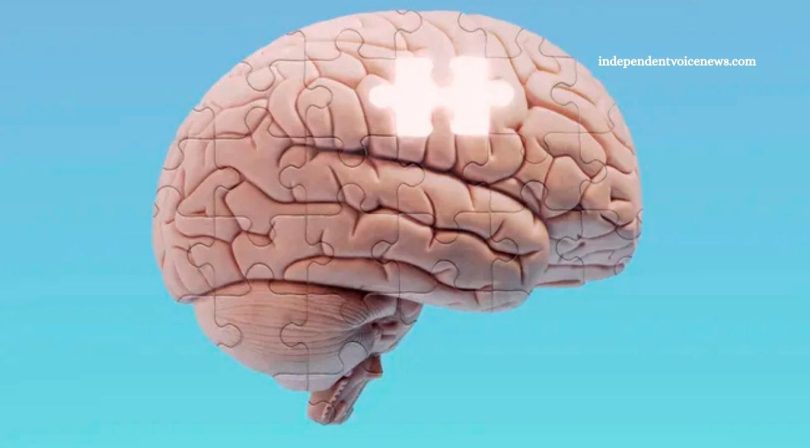

Your phone or computer can run out of storage, but can the human Brain Memory ever reach its memory limit? Surprisingly, neuroscientists say the answer is no—for a typical, healthy brain, memory capacity isn’t fixed or easily exhausted.
“There isn’t a meaningful limit to how much information the brain can store,” says Elizabeth Kensinger, professor of psychology and neuroscience at Boston College. “Memories help us understand the present, predict the future, and build on what we’ve learned.”
Unlike digital devices that store data in isolated files, the brain encodes memories across vast networks of neurons. These interconnected cells—known as an engram—work together in patterns spread across different brain regions. This process, called distributed representation, allows each neuron to contribute to many different memories.
Take your 12th birthday party, for example. That memory isn’t filed away in a single location. Instead, the color of the balloons, the taste of the cake, the sound of your friends singing, and your excitement all engage different brain areas—like the visual, auditory, and emotional centers. These regions fire in a unique pattern, storing the experience. When you recall it later, your brain reactivates that same pattern.
This approach gives the brain an enormous advantage. Because neurons can combine in countless ways, memory capacity scales dramatically. According to Kensinger, overlapping patterns between related memories also allow the brain to generalize and make predictions—key functions of memory. Even if some neurons are damaged, the distributed nature of storage makes it possible to retrieve the memory.
Paul Reber, a neuroscience professor at Northwestern University, explains that this flexible, overlapping system is exactly what gives the brain such vast memory potential. As neurons interact in many different ways, the number of possible memory combinations increases exponentially.
Read More: Dangerous Bacteria Spreading to Popular Beach Destinations
Why don’t we remember everything?
If the brain isn’t limited by storage space, why do we forget so much? According to neuroscientists, the answer lies in how the memory system works—not how much it can hold, but how quickly it can store.
Our brains process information far more slowly than the pace of real life. Although sensory input constantly floods in, only a small portion makes it into long-term memory. Paul Reber, a neuroscience professor at Northwestern University, compares memory to a video camera operating at just 10% efficiency—we retain only a fraction of the moments we experience.
The memories that do stick are gradually converted into long-lasting forms through a process called consolidation. This step transforms short-term experiences into durable, long-term memories.
“The storage process is the real bottleneck,” Reber explained in an interview with Live Science, “not the total amount of space that you have.”
What determines what we keep and what we forget?
At any moment, our brains absorb a flood of sensory information—but we don’t (and shouldn’t) remember it all. Human memory wasn’t designed for perfect recall. Instead, it evolved to help us survive by focusing on what truly matters.
“Our memory system is built to encode only what’s adaptive and necessary,” explains Lila Davachi, professor of psychology and neuroscience at Columbia University. “It’s tuned for survival, not total recall.”
While we may remember things like college memories or random childhood moments, Davachi suggests those aren’t necessarily useful for daily survival. “We just got so good at memory that now we have extra capacity—like remembering college parties—but that’s probably just a byproduct, not a necessity.”
The brain also uses smart strategies to manage memory efficiently. Elizabeth Kensinger, a professor at Boston College, notes that repeated experiences—like your daily commute—are often compressed into general memories. “The brain tends to shift from storing specific details to broader patterns or schemas,” she says. You likely don’t remember each individual drive to work unless something unusual happened, like a flooded road or a near-accident.
This strategy makes memory more efficient and keeps our minds focused on what matters most. Instead of filling up with repetitive details, our brains constantly reshape and refine memories to help us adapt, make decisions, and learn from experience.
So, if you forget where you set down your coffee this morning, don’t worry—your brain isn’t running out of space. It’s just prioritizing more important information.
Frequently Asked Questions
Can the human brain actually run out of memory space?
No, the brain doesn’t run out of memory space like a phone or computer. Neuroscientists say the brain has an almost unlimited capacity due to how it stores information using networks of neurons.
Why don’t we remember everything if the brain has so much capacity?
Memory isn’t limited by space but by processing speed. The brain filters information and stores only what’s meaningful or relevant, focusing on what helps us survive, learn, or adapt.
How does the brain store so much information?
The brain uses a method called distributed representation, where each memory is spread across many neurons. These neurons can participate in multiple memories, dramatically increasing storage potential.
What is memory consolidation?
Memory consolidation is the process of converting short-term experiences into long-term memories. It helps make certain memories more stable and retrievable over time.
Why do we forget everyday things, like where we left our keys?
Everyday forgetfulness usually happens because the brain is prioritizing more important information. Routine or low-priority details may not be fully encoded into long-term memory.
Do all parts of the brain store memory?
Yes, different types of memory are stored across various brain regions. For example, emotional memories involve the amygdala, while sensory details activate the visual, auditory, or taste cortices.
Can memory be improved?
Yes. Sleep, proper nutrition, stress management, and regular mental stimulation (like learning or problem-solving) can all improve memory function and consolidation.
Conclusion
While your devices may run out of storage, your brain is built differently. Neuroscience shows that the human brain has an extraordinary, nearly limitless capacity for memory, thanks to its ability to store information across vast networks of neurons. Rather than reaching a “full” state, the brain prioritizes what to remember based on usefulness, relevance, and survival needs.