
Scientists have achieved a world-first by successfully demonstrating magic state distillation on logical qubits — a key advancement that could unlock fault-tolerant quantum computers vastly more powerful than today’s most advanced supercomputers.
Originally proposed 20 years ago, magic state distillation is a purification process that produces high-quality “magic states” — essential quantum resources that power complex algorithms. These pre-prepared quantum states enable quantum computers to perform highly parallel computations, leveraging the fundamental principles of quantum mechanics.
Until now, researchers could only apply this process to physical qubits, which are prone to errors. Logical qubits — combinations of physical qubits designed to correct these errors — had resisted magic state distillation, limiting their usefulness and preventing quantum systems from surpassing classical machines.
This landmark breakthrough shows that magic state distillation is now possible on logical qubits, paving the way for truly scalable, error-corrected quantum computers capable of solving real-world problems classical systems cannot handle.
QuEra Scientists Achieve First-Ever Magic State Distillation on Logical Qubits
QuEra scientists have now demonstrated magic state distillation on logical qubits for the first time — a breakthrough published on July 14 in the journal Nature. This achievement marks a critical step toward building scalable and fault-tolerant quantum computers.
“Quantum computers would not be able to fulfill their promise without this process of magic state distillation. It’s a required milestone,” said Yuval Boger, chief commercial officer at QuEra, in an interview with Live Science. Although Boger was not directly involved in the research, he emphasized the significance of the accomplishment for the future of quantum technology.
Paving the Way to Fault-Tolerant Quantum Computing
Quantum computers operate using qubits — the quantum equivalent of classical bits — and follow quantum logic to process data and execute advanced algorithms. Unlike classical systems, these machines promise immense computational power. The challenge lies in running highly complex algorithms while keeping error rates extremely low.
Physical qubits are notoriously “noisy,” often affected by environmental factors like temperature shifts and electromagnetic interference. These disturbances can corrupt calculations, which is why quantum error correction (QEC) has become a central focus in quantum research.
Error rates in qubits can reach 1 in 1,000, compared to just 1 in a million trillion (1 in 10¹⁸) in classical bits. Reducing these errors is crucial to ensure quantum algorithms run reliably and at scale — and that’s where logical qubits come into play.
“Quantum computers need to run long and sophisticated calculations to be useful,” said Sergio Cantu, lead author of the study and vice president of quantum systems at QuEra, in an interview with Live Science. “If the error rate is too high, the result turns into mush — useless data. The entire goal of error correction is to reduce the error rate enough to perform millions of reliable calculations.”
Logical qubits are clusters of entangled physical qubits designed to store the same information redundantly. When some of the physical qubits fail, the system still retains accurate data thanks to built-in error correction.
However, logical qubits face limitations. Current error-correction codes allow only the use of “Clifford gates” — simple quantum operations that, while essential, can still be simulated by classical supercomputers. These basic operations alone can’t unlock the full potential of quantum computation.
To run “non-Clifford gates” — operations that enable true quantum parallelism — quantum systems must use purified, high-quality magic states. Generating these states requires significant resources and, until now, hasn’t been possible within logical qubits.
Relying solely on magic state distillation with physical qubits will never achieve quantum advantage. Achieving that breakthrough demands distilling magic states directly within logical qubits — a challenge scientists have now begun to overcome.
Magic States Unlock Capabilities Beyond Supercomputing
Magic states are key to unlocking the full power of quantum computing — enabling operations far beyond the reach of today’s classical supercomputers. “Magic states allow us to expand the number and type of operations that we can do,” said Sergio Cantu, lead author of the study and vice president of quantum systems at QuEra. “Practically, any valuable quantum algorithm requires magic states.”
While researchers have previously generated magic states using physical qubits, the results were inconsistent. These states varied in quality and needed further refinement before they could power advanced quantum algorithms. That refinement process is known as magic state distillation.
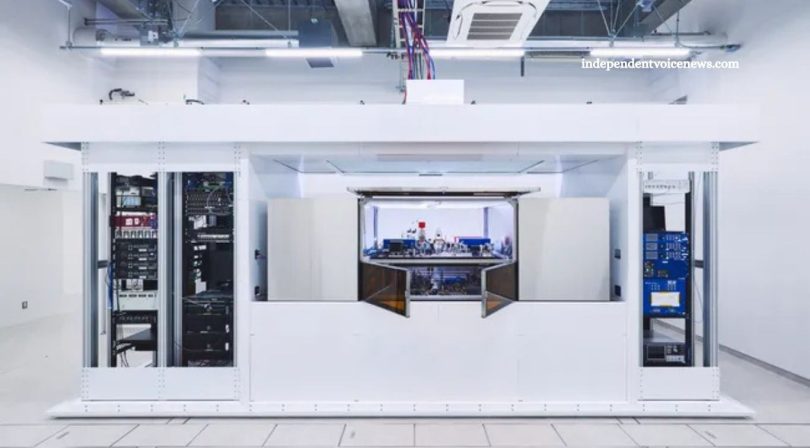
In the latest breakthrough, scientists used QuEra’s Gemini neutral-atom quantum computer to distill five low-fidelity magic states into one high-fidelity magic state. This experiment was performed separately on two logical qubits — one with a Distance-3 code and another with a Distance-5 code — demonstrating that the process scales with the quality of the logical qubit.
“Greater distance means better logical qubits,” explained Yuval Boger, chief commercial officer at QuEra. “A Distance-2 code can detect an error but not correct it. Distance-3 allows correction of a single error, while Distance-5 can handle up to two errors. The higher the distance, the better the fidelity — we liken it to distilling crude oil into jet fuel.”
The distillation process successfully produced a final magic state with higher fidelity than any of the inputs, proving that fault-tolerant magic state distillation works in practice. This marks a pivotal step toward building quantum computers capable of running non-Clifford gates using logical qubits — a requirement for truly useful, scalable quantum computing.
According to Boger, the quantum industry is entering a new phase: “A few years ago, the question was whether quantum computers could be built at all. Then it was about detecting and correcting errors — and companies like us and Google proved that’s possible. Now, the focus is shifting again: can we make quantum computers truly useful? That means building machines capable of running programs that classical computers simply can’t simulate.”
Frequently Asked Questions
What is a ‘magic state’ in quantum computing?
A magic state is a specially prepared quantum state used to perform non-Clifford operations — the essential ingredients that make quantum computers more powerful than classical ones. These states are required for running complex quantum algorithms that cannot be simulated efficiently on traditional machines.
Why is the magic state breakthrough important?
The breakthrough enables scientists to distill high-fidelity magic states on logical qubits for the first time. This step is crucial because it allows fault-tolerant quantum computers to run powerful algorithms without being overwhelmed by errors.
What is magic state distillation?
Magic state distillation is a purification process that takes several noisy or imperfect magic states and produces one cleaner, more reliable version. This is vital for ensuring quantum operations are accurate and scalable.
What are logical qubits, and how do they differ from physical qubits?
Logical qubits are groups of physical qubits that work together using quantum error correction to store data more reliably. Physical qubits are more prone to noise and errors, while logical qubits offer improved stability and fidelity.
Why hasn’t magic state distillation worked on logical qubits until now?
Until this breakthrough, the process of distilling magic states was only possible on noisy physical qubits. Applying it to logical qubits — which are more stable but more complex — was a longstanding challenge due to the difficulty in managing quantum error correction alongside magic state purification.
How does this advancement impact the future of quantum computing?
This achievement marks a key milestone toward building fault-tolerant quantum computers that can reliably perform computations far beyond the reach of today’s classical supercomputers. It opens the door to practical, scalable quantum applications in cryptography, drug discovery, materials science, and more.
Who led the study, and where was it published?
The research was conducted by scientists at QuEra Computing and published in the journal Nature on July 14, 2025. It represents a collaboration of cutting-edge work in neutral-atom quantum hardware and error-corrected logic.
Conclusion
The successful demonstration of magic state distillation on logical qubits marks a transformative leap in quantum computing. After more than 20 years of theoretical groundwork, scientists have now achieved a critical milestone that brings truly fault-tolerant quantum computers within reach. By enabling the use of high-fidelity magic states in logical qubits, researchers have overcome a major barrier to running the complex, non-Clifford operations essential for unlocking the full power of quantum algorithms.