
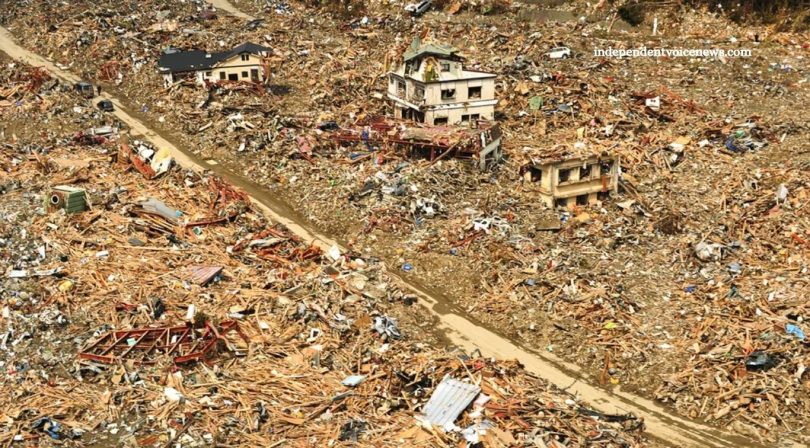

Japan has taken a revolutionary step in earthquake preparedness by completing a vast underwater network of seismic sensors, often dubbed an “undersea nervous system.” Designed to detect earthquakes and tsunamis in real-time, this technological marvel spans thousands of miles beneath the Pacific Ocean. The system provides faster, more accurate warnings than traditional land-based methods—adding crucial seconds or even minutes for evacuation and disaster response.
This ambitious project was born out of necessity. The catastrophic Tōhoku earthquake and tsunami of 2011 exposed the limitations of existing detection systems. The magnitude 9.0 megathrust earthquake claimed nearly 20,000 lives, devastated infrastructure, and led to the Fukushima Daiichi nuclear disaster. In the aftermath, Japan invested heavily in upgrading its early warning systems culminating in the deployment of this sophisticated ocean-floor seismic network.
Read More: Dan Bongino Slams Justice Department’s Handling of Epstein Case Files
Inside Japan’s Ocean-Floor ‘Nervous System’
What Is It?
Japan’s new system is the most comprehensive offshore earthquake and tsunami monitoring network in the world. Officially completed in June 2025, it comprises three major subsystems:
- S-net (Seafloor Observation Network for Earthquakes and Tsunamis)
- DONET (Dense Oceanfloor Network System for Earthquakes and Tsunamis)
- N-net (Nankai Trough Seafloor Observation Network for Earthquakes and Tsunamis)
Together, they provide real-time monitoring of major subduction zones off Japan’s eastern and southern coasts.
How It Works
More than 5,000 miles of fiber-optic cable connect over 200 observation stations on the ocean floor. These stations are equipped with highly sensitive instruments:
- Seismometers to measure ground shaking
- Accelerometers to track movement intensity
- Pressure gauges to detect tsunami waves
- Hydrophones for acoustic monitoring
These sensors continuously relay data to shore-based facilities, offering live insights into tectonic behavior deep beneath the seabed.
Learning from the 2011 Disaster
The 2011 earthquake, which originated off Japan’s east coast, caused immense damage largely due to delayed and inaccurate warnings. Land-based sensors detected initial shock waves, but couldn’t immediately determine the full scale or tsunami threat. This left some communities with less than 10 minutes to evacuate—nowhere near enough time.
The new undersea system changes that. It offers:
- Faster tsunami alerts by up to 20 minutes
- More accurate earthquake magnitude readings
- Earlier warnings for inland tremors—up to 20 seconds sooner
Even a few extra seconds can make a life-saving difference, especially for shutting down nuclear reactors, halting bullet trains, or evacuating vulnerable areas.
Strategic Coverage of High-Risk Zones
S-net: Covering the Japan Trench
Completed in 2017, S-net stretches across 116,000 square miles of ocean, connecting 150 observatories via 3,540 miles of cable. This region was ground zero for the 2011 quake. In 2018, when a magnitude 6.0 quake struck, S-net’s sensors triggered alerts 20 seconds earlier than land-based systems.
DONET: Monitoring the Nankai Trough
Established in 2006, DONET focuses on the Nankai Trough—an area prone to massive earthquakes. This fault line lies dangerously close (40–60 miles) to heavily populated regions like Osaka and Nagoya. DONET’s early success helped inform national preparedness plans for one of Japan’s most likely future disaster zones.
N-net: The Final Piece of the Puzzle
Begun in 2019 and completed in 2025, N-net extends DONET’s coverage, forming a unified monitoring network across all major offshore fault zones. With 36 new observatories connected by more than 1,000 miles of cable, it enables seamless, real-time monitoring of one of the world’s most seismically active regions.
A Tool for Research and Prediction
The benefits of this system go beyond warnings. It also provides valuable insights into how earthquakes begin and evolve.
Understanding Slow-Slip Events
Seismologists like Dr. Harold Tobin of the Pacific Northwest Seismic Network are particularly interested in slow-slip events—gradual movements along fault lines that don’t trigger quakes but may precede them.
These slow movements can now be observed in unprecedented detail. While not all slow-slip events result in earthquakes, some may serve as precursors to major seismic events, offering potential for even earlier alerts in the future.
Why the U.S. and Other Nations Lag Behind
Despite facing similar threats, particularly along the Cascadia Subduction Zone, the United States has yet to implement a comparable undersea network. Experts warn that the Pacific Northwest is overdue for a major quake, yet relies mostly on land-based sensors. The contrast underscores Japan’s commitment to proactive disaster mitigation through technology and investment.
Frequently Asked Questions
Why did Japan build an undersea earthquake detection system?
To improve warning times and prevent disasters like the 2011 earthquake and tsunami, which exposed the limitations of land-based systems.
How does the system detect tsunamis?
Pressure gauges on the ocean floor detect changes in water pressure caused by tsunami waves, allowing earlier and more accurate warnings.
What makes this system better than traditional seismic sensors?
It provides real-time data from the source of offshore earthquakes, enabling faster, more accurate alerts compared to land-based systems.
Can this system predict earthquakes?
Not yet. However, it detects slow-slip events that might indicate future seismic activity, which researchers are studying as possible early warning signs.
How long do warnings take to reach people?
The system can issue alerts up to 20 seconds earlier for earthquakes and up to 20 minutes earlier for tsunamis.
Is the system automated?
Yes. The network is integrated with Japan’s national early warning system, automatically sending alerts to government agencies, broadcasters, and the public.
How much did the project cost?
While exact figures vary by phase, estimates place the total investment at hundreds of millions of dollars, funded largely by the Japanese government.
Can other countries build similar systems?
Yes, but few have made comparable investments. Japan’s system is currently the most advanced of its kind worldwide.
Conclusion
Japan’s undersea earthquake-sensing system represents a major leap forward in disaster preparedness. By wiring the ocean floor with high-tech sensors, the country has not only increased its resilience to earthquakes and tsunamis but also set a new global standard for early warning infrastructure.
This real-time “nervous system” of the sea is more than a marvel of engineering—it’s a life-saving tool born of hard lessons and a commitment to never repeating the tragedies of the past. As seismic risks increase worldwide, especially with growing urban populations near fault zones, Japan’s model offers a blueprint for how science and infrastructure can come together to protect lives and economies.