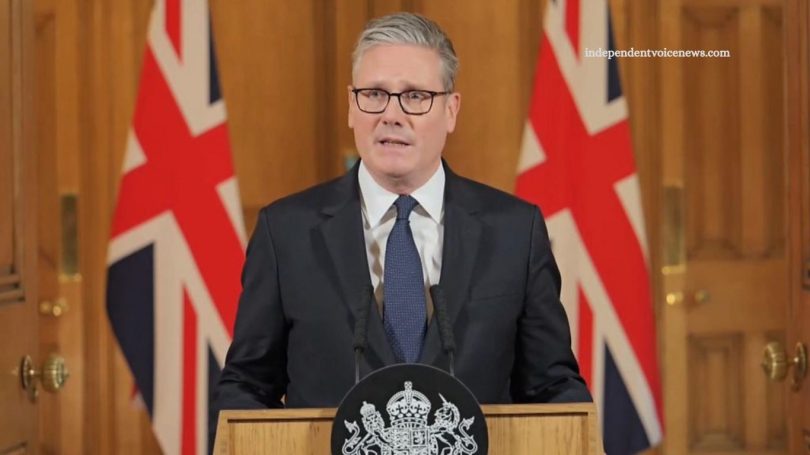

The United Kingdom will formally recognise a Palestinian state at the upcoming United Nations General Assembly in September, unless Israel undertakes immediate and substantive actions to alleviate the crisis in Gaza. This declaration, made by Prime Minister Sir Keir Starmer during an emergency press briefing, marks a significant shift in UK foreign policy and places mounting diplomatic pressure on Israel amid ongoing conflict and humanitarian concerns.
Conditional Recognition Based on Gaza Relief and Peace Efforts
Speaking to journalists after convening a high-level cabinet meeting, Starmer clarified the conditions the UK government expects Israel to meet to delay or prevent recognition. These include:
- A formal ceasefire agreement;
- A commitment to a long-term, sustainable peace plan that envisions a two-state solution;
- Full cooperation with United Nations humanitarian operations, including the resumption of aid deliveries into Gaza;
- A public renouncement of any future annexations in the West Bank.
If Israel fails to comply, the UK will proceed with official recognition of Palestine at the UN in September. “The intolerable situation in Gaza and the rapid erosion of prospects for a two-state solution require bold, principled action,” Starmer stated. “Our goal remains clear: a safe, secure Israel alongside a viable and sovereign Palestinian state.”
Read More: Israel Airdrops Humanitarian Aid into Gaza
International Context and Growing Diplomatic Momentum
The UK is not acting in isolation. France recently confirmed it would also recognise a Palestinian state this September, becoming the first G7 country to do so. This growing momentum among Western powers highlights mounting frustration with the status quo in the Israel-Palestine conflict and a shared urgency to push for lasting peace.
Spain, Ireland, and Norway already recognised Palestinian statehood in 2024, citing both humanitarian and political imperatives. With 139 countries globally already acknowledging Palestine as a sovereign state, the UK’s decision, although conditional, could significantly shift the geopolitical landscape.
Domestic and International Responses
Reaction to the UK’s announcement has been mixed and politically charged. Israeli Prime Minister Benjamin Netanyahu harshly criticised the move, claiming it rewards terrorism. “A jihadist state on Israel’s border today will threaten Britain tomorrow,” he warned in a statement posted online. “Appeasement towards jihadist terrorists always fails. It will fail you too.”
Netanyahu’s government, firmly opposed to the two-state framework, is unlikely to accept the conditions laid out by the UK. The Israeli administration has long maintained that such recognitions undermine Israel’s security and embolden Hamas, which remains classified as a terrorist organisation by the UK, the US, and the EU.
Meanwhile, the Palestinian Authority has welcomed the UK’s position, though many within Palestinian civil society express concern about conditionality, which they argue links their right to self-determination to the actions of the occupying power.
Divisions Within the UK Political Landscape
At home, Prime Minister Starmer faces pressure from across the political spectrum. Over 255 Members of Parliament, including more than half of Labour MPs, signed a joint letter calling for immediate and unconditional recognition of a Palestinian state. The letter, organised by Labour MP Sarah Champion, emphasises the importance of separating recognition from the conduct of the Israeli government.
“I am delighted and relieved by the announcement,” Champion said. “This move sends a strong political message. However, I am concerned that our recognition appears contingent upon Israel’s actions. That undermines the principle of self-determination.”
Liberal Democrat leader Sir Ed Davey echoed this sentiment, welcoming the government’s stance but calling for more decisive measures. “Recognition should have come months ago. The Prime Minister must also cease arms sales to Israel and implement sanctions targeting the Israeli cabinet,” Davey urged.
In contrast, the Conservative Party and Reform UK criticised the move as premature and dangerous. Tory leader Kemi Badenoch argued the decision amounts to “political posturing at its worst” and does little to achieve tangible outcomes. “Recognising a Palestinian state won’t bring the hostages home, won’t end the war, and won’t get aid into Gaza,” she said.
US and European Perspectives
While the UK and France are moving forward with formal recognition, the United States remains cautious. Former US President Donald Trump, who met with Prime Minister Starmer in Scotland just days before the announcement, said the issue had not been discussed during their talks.
“You could make the case that recognising Palestine right now rewards Hamas,” Trump told reporters. “And I don’t think they should be rewarded.”
The current US administration, along with several European allies including Germany, continues to support recognition only as part of a broader peace process. German Chancellor Friedrich Merz recently reaffirmed that Germany has no plans to follow suit in the near term. “Recognition should be one of the last steps on the road to a genuine two-state solution,” he said.
Humanitarian Crisis in Gaza Drives Urgency
The UK’s policy shift comes as Gaza faces what international aid agencies are calling “man-made mass starvation.” UN officials accuse Israel of blocking aid convoys and restricting humanitarian access to the besieged territory. Israel denies these claims, asserting that it is not preventing aid and that no famine exists.
Foreign Secretary David Lammy, speaking at a UN conference in New York aimed at advancing the two-state solution, detailed recent British efforts to provide emergency relief. “Working with Jordan, we successfully air-dropped 20 tonnes of aid to Gaza,” Lammy said. He also reiterated the call for safe ground routes to be opened for aid delivery and for all parties to respect international humanitarian law.
Starmer and Lammy both stressed that the recognition of Palestine is not merely a symbolic act but a strategic measure aimed at preserving long-term peace. “If we allow the hope for a two-state solution to die, we condemn future generations to perpetual conflict,” Lammy said.
Hamas and the Challenge of Governance
Starmer was also clear in his message to Hamas, calling for the immediate release of all hostages and a permanent ceasefire. He further demanded that the group disarm and commit to playing no role in Gaza’s future governance.
These stipulations reflect long-standing international concerns over Hamas’s role in the conflict and governance. The UK, along with other Western powers, considers Hamas a terrorist organisation and refuses to engage with it as a legitimate political actor.
Strategic Significance of September
September’s UN General Assembly presents a critical diplomatic window. For the UK, recognition at that forum would carry significant symbolic and strategic weight. Analysts argue that aligning such a move with an international summit could maximise impact and galvanise further support for a multilateral push toward peace.
Still, critics argue that unless recognition is accompanied by concrete changes on the ground such as security guarantees, governance frameworks, and humanitarian protections it may amount to little more than a diplomatic gesture.
Frequently Asked Questions
Why is the UK considering this move now?
The decision follows escalating humanitarian concerns in Gaza, stalled peace talks, and growing international support for Palestinian statehood. The UK views recognition as a step toward a long-term two-state solution.
Is this recognition final or conditional?
The UK’s recognition is conditional. If Israel does not act on the outlined requirements before the UN summit in September, recognition of Palestine will move forward.
How does this impact UK-Israel relations?
The announcement has strained relations. Israeli officials have criticized the move, claiming it could undermine regional security and reward terrorism. The UK insists it remains committed to Israel’s right to security.
How have other countries responded?
Countries like France, Spain, Ireland, and Norway have already recognised the Palestinian state. The UK’s decision aligns it with a broader international trend toward formal recognition.
What is the Palestinian response?
The Palestinian Authority supports the recognition but has expressed concern over making statehood conditional. Many Palestinians view recognition as a right, not a bargaining chip.
Will the US follow the UK’s lead?
As of now, the US maintains that recognition of Palestine should be part of a negotiated peace process. The UK’s move increases pressure on Washington but does not guarantee a shift in US policy.
Could this recognition lead to peace in the region?
Recognition alone won’t bring peace but is seen as a potential catalyst to revive peace talks. Critics argue it could also deepen divisions if not paired with broader diplomatic efforts.
When will the UK make its final decision?
The final decision is expected by September 2025, during the United Nations General Assembly, depending on whether Israel meets the set conditions.
Conclusion
The UK’s decision to conditionally recognise a Palestinian state marks a significant turning point in its foreign policy and underscores growing international urgency to resolve the Israeli-Palestinian conflict. By linking recognition to specific Israeli actions—such as a ceasefire, humanitarian cooperation, and a renewed commitment to peace—the UK aims to encourage meaningful progress toward a two-state solution.