
Nearly two years have passed since Hamas finalized its plans to launch a surprise attack on Israel. In that time, the geopolitical landscape of the Middle East has dramatically shifted. What was once seen by Israeli Prime Minister Benjamin Netanyahu as a manageable issue Palestinian unrest has escalated into a full-blown War Crime that now threatens to redefine regional alliances, international law, and diplomatic strategies.
A Misjudged Threat
In 2023, Netanyahu maintained that Iran was Israel’s greatest existential threat. While his administration voiced strong opposition to Hamas, it quietly allowed Qatari funding into Gaza, aimed at stabilizing the enclave and preserving calm. This maneuver, intended to provide Netanyahu space to pursue foreign policy objectives such as normalization with Saudi Arabia, would later be viewed as dangerously shortsighted.
Meanwhile, in Washington, President Joe Biden’s administration believed it was on the brink of brokering a historic deal between Saudi Arabia and Israel. That optimism has since dissolved, revealing what many now view as a sequence of political illusions that failed to address the unresolved core conflict between Israelis and Palestinians.
Read More: UK, 27 Nations Condemn Israel for Killing Gaza Aid Seekers
October 7: A Day That Changed Everything
On October 7, 2023, Hamas launched its unprecedented and deadly assault on Israel, killing 1,200 people—mostly civilians—and taking 251 hostages. The Israeli government and military were caught off-guard, triggering widespread public anger and international concern.
Despite mounting domestic pressure, Netanyahu has refused to initiate an inquiry into the intelligence and security failures that led to the attack. His reluctance has fueled criticism that political expediency is taking precedence over accountability.
A Century-Long Conflict Reignited
The Israeli-Palestinian conflict, simmering for over a century, erupted anew with a scale and intensity unseen since 1948 and 1967. The war has now entered a critical juncture, reshaping not only regional dynamics but also the principles underpinning international human rights and humanitarian law.
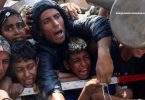
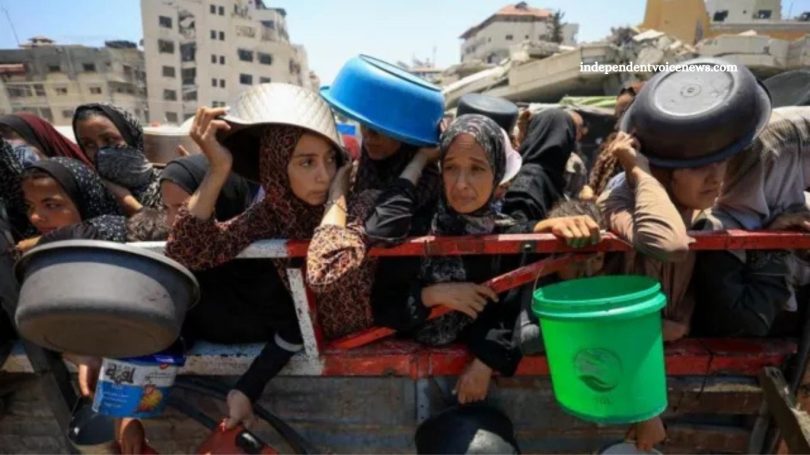
Gaza has borne the brunt of Israel’s military response. Nearly two years into the conflict, the civilian toll is staggering. Tens of thousands of Palestinians have been killed, vast areas have been reduced to rubble, and aid systems have collapsed under the weight of ongoing bombardments.
Journalism Under Siege
Reporting on this war has proven perilous. On October 7, journalists were caught as off-guard as intelligence agencies. Since then, Israel has barred international reporters from entering Gaza, leaving the task of frontline coverage to Palestinian journalists. Nearly 200 of them have been killed in the line of duty.
Despite restricted access, the facts emerging from both sides are harrowing. While Hamas’s actions on October 7—targeting civilians and taking hostages—are widely recognized as war crimes, there is mounting evidence that Israel, too, has violated international laws.
Mounting Accusations Against Israel
Israel stands accused of several war crimes, including deliberate starvation of civilians, disproportionate military action, and systemic destruction of civilian infrastructure. Human rights groups and legal experts cite these acts as clear breaches of the Geneva Conventions.
The International Criminal Court (ICC) has issued arrest warrants for Netanyahu and his former defense minister, charging them with war crimes. Both have denied any wrongdoing and condemned the proceedings as politically motivated.
Simultaneously, the International Court of Justice (ICJ) is reviewing a case accusing Israel of committing genocide against Palestinians. The Israeli government has rejected the charges outright, labeling them antisemitic and part of a broader campaign to delegitimize the Jewish state.
Waning International Support
Once united in solidarity with Israel following the October 7 attacks, many of its allies are now publicly distancing themselves. Western nations, long-standing supporters of Israel, have expressed increasing frustration over its military conduct in Gaza.
Even former President Donald Trump—arguably Israel’s most influential ally in recent years—is reported to be losing patience. Netanyahu’s decision to bomb Damascus, targeting Syria’s newly aligned regime, caught Trump off-guard and stirred diplomatic tensions.
European nations have been more direct in their condemnation. On July 21, foreign ministers from the UK, Canada, Australia, New Zealand, Japan, and much of the European Union signed a joint statement sharply criticizing Israel’s role in the humanitarian crisis.
The Joint Statement: A Turning Point
“The suffering of civilians in Gaza has reached new depths,” the joint declaration read. It condemned the Israeli-run Gaza Humanitarian Foundation (GHF), introduced to replace established UN-led aid systems, as both “ineffective” and “inhumane.”
The statement continued:
“The Israeli government’s aid delivery model is dangerous, fuels instability, and deprives Gazans of human dignity. We condemn the drip-feeding of aid and the inhumane killing of civilians, including children, seeking to meet their most basic needs of water and food. It is horrifying that over 800 Palestinians have been killed while seeking aid.”
David Lammy, the UK’s Foreign Secretary, echoed this sentiment in Parliament, calling Israel’s obstruction of humanitarian assistance “unacceptable” and urging immediate compliance with international humanitarian law.
Calls for Stronger Action
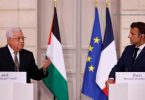
Despite strong rhetoric, many lawmakers, particularly in the UK and France, are pressing for more than just statements. Labour MPs in Westminster have expressed frustration over the government’s inaction, with growing calls for the UK to officially recognize Palestinian statehood—a move supported by the majority of UN member nations.
While the UK and France have reportedly discussed a joint recognition, both appear hesitant to make such a declaration amid ongoing hostilities. Still, the political momentum is shifting. Recognition of Palestinian sovereignty may soon become a litmus test for international credibility on human rights.
Netanyahu’s Political Balancing Act
With Israel’s parliament—the Knesset—entering its summer recess, Netanyahu finds temporary relief from internal political threats. Ultra-nationalist members of his fragile coalition continue to oppose any ceasefire, warning they will bring down the government if he agrees to one.
This political tightrope has paralyzed Netanyahu’s options. His refusal to pursue a truce is less about military strategy and more about political survival. Should his government fall, he would face not only a public reckoning for the October 7 security failures but also a revived corruption trial that has long shadowed his leadership.
A Ceasefire on the Horizon?
Despite these hurdles, a ceasefire now appears more plausible than it has in months. International pressure is intensifying, and the suffering on both sides is mounting. For Gaza’s civilians and the estimated 20 surviving hostages held by Hamas, a truce could mean a lifeline.
However, a ceasefire—if it comes—will not mark the end of the conflict. The damage is profound, both physically and politically. What it could offer, though, is a vital pause—an opportunity to pivot from violence to diplomacy.
Frequently Asked Questions
Who is Jeremy Bowen?
Jeremy Bowen is the BBC’s international editor and a seasoned journalist specializing in Middle East affairs. He has reported extensively on the Israeli-Palestinian conflict for decades, offering in-depth analysis on the region’s political and humanitarian issues.
What did Jeremy Bowen report about Israel and Gaza?
In his latest reporting, Bowen highlights growing concerns among Israel’s international allies over evidence of war crimes in Gaza. He details how support for Israel has waned due to the humanitarian crisis and the conduct of the Israeli military during the ongoing conflict.
What are the alleged war crimes committed by Hamas?
On October 7, 2023, Hamas launched a surprise attack on Israel, killing 1,200 people—mostly civilians—and taking 251 hostages. These acts, including targeting civilians and hostage-taking, are widely regarded as war crimes under international law.
What war crimes is Israel accused of committing in Gaza?
Israel is accused of several violations, including the starvation of civilians, disproportionate military force, failure to protect non-combatants, and destruction of civilian infrastructure. These actions are under scrutiny by the International Criminal Court (ICC) and the International Court of Justice (ICJ).
How have Israel’s allies responded to the situation in Gaza?
Nations such as the UK, Canada, Australia, New Zealand, Japan, and many EU members have condemned Israel’s actions in joint statements. They have criticized Israel’s aid policies in Gaza and called for compliance with international humanitarian law.
What is the role of the International Criminal Court (ICC)?
The ICC has issued arrest warrants for Israeli Prime Minister Benjamin Netanyahu and his former defense minister, citing credible evidence of war crimes. Both leaders deny wrongdoing and claim the charges are politically biased.
What is the Gaza Humanitarian Foundation (GHF), and why is it controversial?
The GHF is an aid distribution system introduced by Israel to replace existing UN-led mechanisms. Critics argue it is inefficient, dangerous, and responsible for worsening the humanitarian crisis, with over 800 Palestinians reportedly killed while seeking aid.
Conclusion
The ongoing conflict in Gaza has reached a critical turning point, exposing deep-rooted political failures and igniting global outrage over widespread humanitarian suffering. Jeremy Bowen’s reporting highlights a stark reality: the once-solid support for Israel among its Western allies is rapidly eroding as evidence of potential war crimes mounts.