
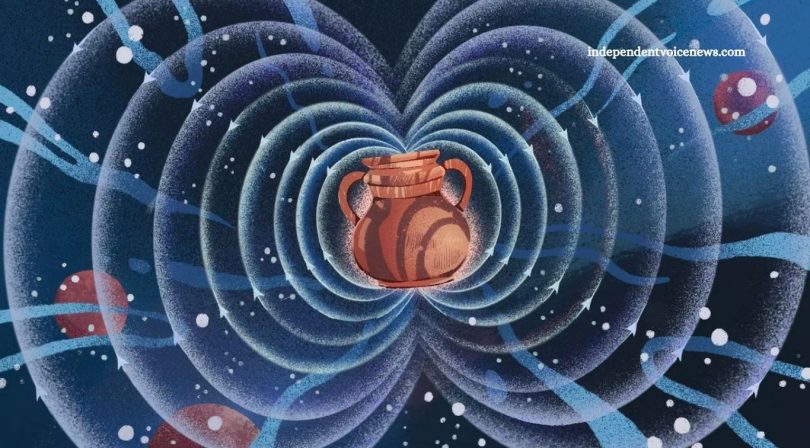

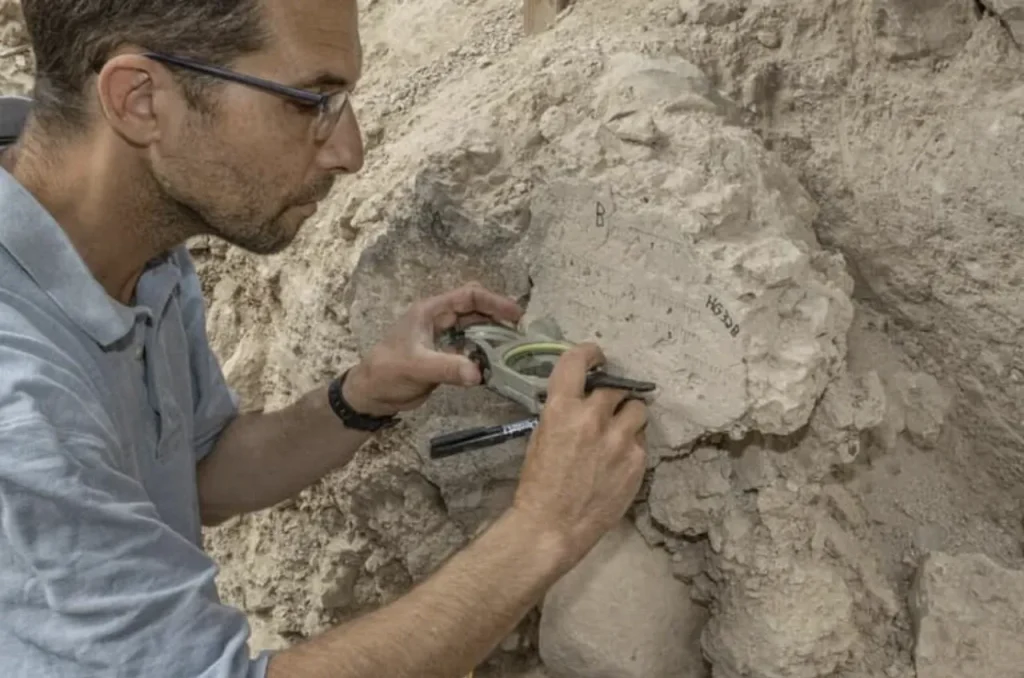
In 2008, archaeologist Erez Ben-Yosef uncovered a chunk of Iron Age copper slag in southern Jordan what seemed like mere “trash” turned out to record the strongest magnetic field anomaly ever discovered. Working alongside geologist Ron Shaar from The Hebrew University of Jerusalem, Ben-Yosef helped identify an intense geomagnetic spike dating back 3,000 years.
Initially met with skepticism, the findings eventually gained acceptance after over a decade of research. Scientists named the phenomenon the Levantine Iron Age Anomaly (LIAA), which showed Earth’s magnetic field in the Middle East surging unpredictably between 1100 and 550 B.C.
Using archaeomagnetism a technique that analyzes magnetic particles in ancient materials like slag, pottery, and stone—researchers reconstructed the Earth’s magnetic history with more detail than traditional rock-based methods. While volcanic rocks provide magnetic data spanning millions of years, archaeomagnetism offers a finer view of recent changes.
Understanding past magnetic fluctuations sheds light on the “geodynamo,” the flow of molten iron in Earth’s outer core that generates the magnetic field. Shifts in this field reflect deep activity within the planet. Since direct observation of the core is impossible, tracking geomagnetic changes is the only window into its behavior.
This research is critical as evidence shows Earth’s magnetic field is gradually weakening. A weaker field could disrupt satellite systems and increase radiation exposure. However, magnetic intensity data only dates back to 1832. By extending the timeline with archaeomagnetic records, scientists can better predict future changes and safeguard modern technologies.
Read More: Quantum Computing Milestone: Scientists Crack ‘Magic State’ After 20 Years
How Archaeological Artifacts Reveal Earth’s Ancient Magnetic Field
Archaeomagnetism taps into how ancient humans interacted with their environment—building firepits, firing ceramics, making bricks, and smelting metals. These high-temperature processes caused magnetic particles within materials to realign with Earth’s magnetic field. As the materials cooled, those particles locked into position, preserving a magnetic “snapshot” from the moment they were last heated.
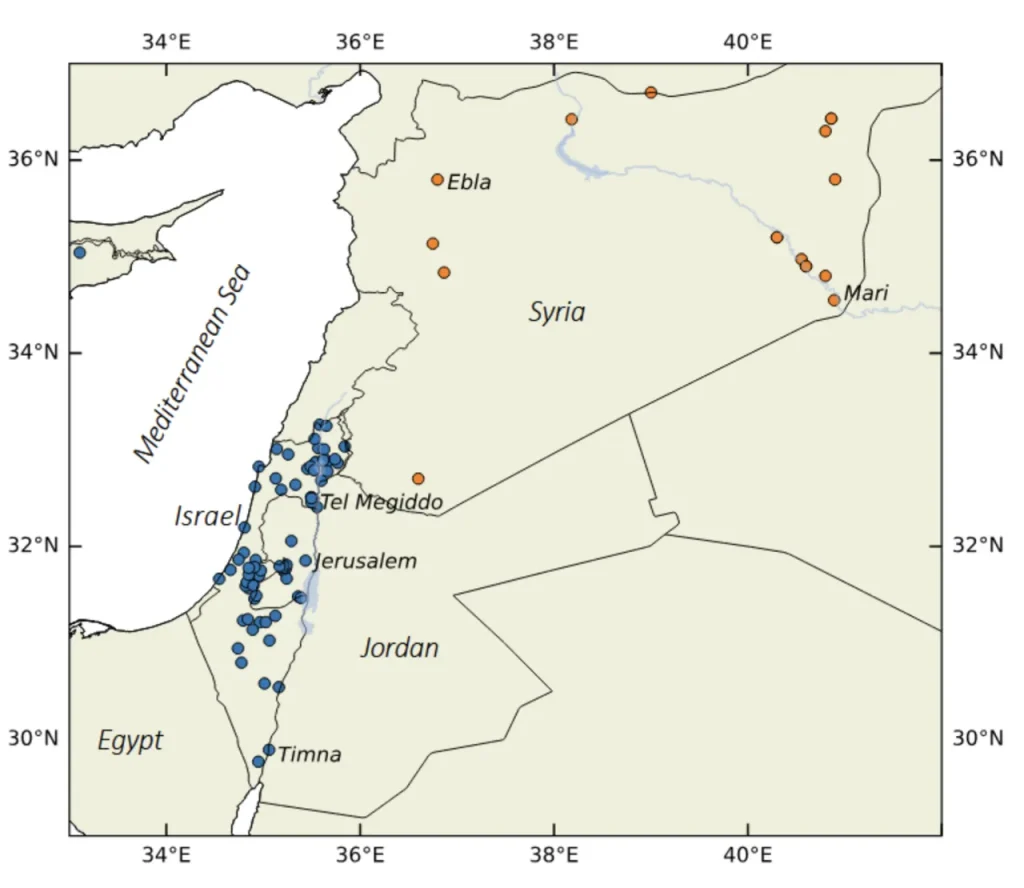
This fossilized magnetic signature reflects the local magnetic field within a 310-mile (500-kilometer) radius. When paired with radiocarbon dating or other methods, the data helps scientists create a timeline of how the regional magnetic field evolved.
This is crucial because Earth’s magnetic field is always changing. For example, between 2001 and 2007, magnetic north shifted over 200 miles due to shifting magnetic “flux patches” beneath Canada and Siberia, which funnel the field’s energy deep into the core. These movements can cause swirls in the field called magnetic anomalies—irregular, hard-to-predict deviations.
Artifacts that capture these anomalies could help scientists understand the causes of magnetic irregularities and track long-term changes in Earth’s geomagnetic behavior.
Archaeomagnetism Grows, But Global Gaps Remain
Since its introduction in the 1950s, archaeomagnetism has advanced significantly thanks to modern magnetometers and improved data analysis. These tools now allow scientists to extract far more precise details about Earth’s magnetic past.
To unify and expand global understanding, researchers are building Geomagia50, a worldwide archaeomagnetic database hosted by the University of Minnesota’s Institute for Rock Magnetism. But despite growing interest, major barriers remain.
“The equipment is expensive,” says Maxwell Brown, a UM geophysicist and curator of Geomagia50. Top-tier magnetometers can cost up to $800,000, limiting access to just a few U.S. labs. Around 90% of the database’s data comes from Europe. Africa, notably, lacks even a single magnetometer for archaeomagnetic work.
This equipment gap makes it difficult for archaeologists to contribute. “There’s no easy way to submit artifacts for testing unless you’re partnered with a lab,” explains Erez Ben-Yosef. Even with access, analyzing intensity takes time. According to Ron Shaar, samples must be reheated up to 20 times, often taking months to produce reliable results.
This uneven data skews our magnetic history. “We have a strong bias toward Europe,” says Monika Korte, a magnetic modeler at Germany’s GFZ Helmholtz Centre. Sparse regions like Africa and parts of Asia offer only fragmented insight.
Geographic coverage matters. Spikes similar to the Levantine Iron Age Anomaly have been detected in China and Korea, but without broader data, scientists can’t confirm if they’re truly related or isolated events.
Why Understanding Magnetic Anomalies Matters More Than Ever
The discovery of the Levantine Iron Age Anomaly (LIAA) challenged previous assumptions about how strong Earth’s magnetic field can become. While these ancient spikes may seem like historical curiosities, they hold real implications for today’s technology-dependent world.
One modern concern is the South Atlantic Anomaly (SAA) a region of weakened magnetic field stretching across South America to southern Africa. Likely formed around 11 million years ago due to a misalignment between Earth’s magnetic and rotational axes, the SAA continues to affect satellites and the International Space Station by allowing more solar radiation to penetrate Earth’s magnetic shield.
Although scientists better understand the SAA’s gradual weakening, the intense, localized surges of the LIAA remain a mystery. Measuring roughly 1,000 miles (1,600 km) across, this anomaly produced spikes far stronger than anything seen today. Some experts suggest it originated from a magnetic “flux patch” in Earth’s outer core that either drifted or erupted beneath the Levant region yet no single theory fully explains its origin.
Recent simulations by geomagnetist Pablo Rivera suggest both the SAA and LIAA may be influenced by a “superplume” a massive upwelling of hot rock at the core-mantle boundary beneath Africa that disrupts the geodynamo, the internal engine powering Earth’s magnetic field.
Still, major questions remain. “There’s no model that perfectly matches the magnetic features we observe,” says Monika Korte, a magnetic field expert at GFZ Helmholtz Centre in Germany. Sparse data especially outside Europe limits our ability to compare anomalies or develop a unified theory.
With satellite numbers surging from 3,000 in 2020 to over 13,500 today and a projected 54,000 by 2030—the stakes are rising. Earth’s magnetic field shields satellites from harmful radiation, but weak spots like the SAA expose them to damage, data corruption, and communication failures.
Understanding historic magnetic anomalies could be key to predicting future changes—and protecting the growing web of systems that modern life depends on.
Expanding the Global Record of Earth’s Magnetic History
Despite the high costs and complexity of archaeomagnetism, global efforts are accelerating to fill critical data gaps. In the U.S., the Institute for Rock Magnetism is growing its archaeomagnetism program, focusing on the Midwest. Their goal: to develop a regional magnetic timeline, similar to the detailed record built in the Levant by Shaar and his team.
Worldwide interest is also rising. In 2021, Cambodia released its first archaeomagnetic data. By 2022, researchers had developed the first regional magnetic model for Africa’s recent past—an essential step toward global coverage.
As archaeomagnetic datasets expand, scientists gain a clearer view of how deep Earth features—like superplumes—influence magnetic behavior. Current data spans just a brief window of Earth’s history. “We’ve captured only a tiny snapshot in time,” says Shaar. “There may be many more magnetic anomalies waiting to be discovered.”
Frequently Asked Questions
What does it mean that Earth’s magnetic field is weakening?
Earth’s magnetic field, which shields the planet from solar and cosmic radiation, has been gradually losing strength over the past 180 years. This weakening could impact satellite systems, navigation, and even increase radiation exposure in certain regions.
How do ancient magnetic crystals help us understand Earth’s magnetic history?
Magnetic crystals in ancient artifacts—like pottery, bricks, and copper slag—retain the direction and strength of Earth’s magnetic field at the time they were last heated. These “frozen” records help scientists reconstruct past magnetic behavior with high precision.
What are archaeomagnetic anomalies like the Levantine Iron Age Anomaly?
The Levantine Iron Age Anomaly (LIAA) is a mysterious spike in magnetic field strength discovered in the Middle East around 3,000 years ago. It’s one of the strongest and most abrupt magnetic changes ever recorded and may hold clues to similar future events.
Why is the weakening of Earth’s magnetic field a concern today?
A weaker magnetic field could lead to disruptions in GPS, power grids, communication systems, and satellite operations. It may also expose astronauts and high-altitude flights to more harmful radiation.
What role do lost civilizations play in this research?
Artifacts from ancient civilizations—such as fired clay, metalwork, or building materials—often preserve magnetic data. By analyzing these materials, researchers uncover vital information about Earth’s geomagnetic past, especially in areas with limited geological records.
Can archaeomagnetism predict future magnetic field changes?
While it can’t predict exact events, archaeomagnetism improves our understanding of magnetic field trends over thousands of years. This deeper historical context helps scientists refine models of Earth’s core dynamics and make better-informed forecasts.
Are certain parts of the world more affected by magnetic field changes?
Yes. Regions like the South Atlantic Anomaly experience significant weakening, exposing satellites and electronic systems to more radiation. Uneven data coverage, especially in Africa and parts of Asia, makes global understanding more difficult.
Conlcusion
As Earth’s magnetic field continues to weaken, understanding its history becomes more urgent than ever. Through archaeomagnetism, ancient artifacts—once overlooked—are revealing powerful clues about past magnetic anomalies and deep-core processes. Despite technical and geographic challenges, global efforts are expanding the magnetic record, helping scientists decode events like the Levantine Iron Age Anomaly and the South Atlantic Anomaly. These insights not only enrich our understanding of Earth’s dynamic interior but also enhance our ability to safeguard modern technologies from future geomagnetic disruptions.