
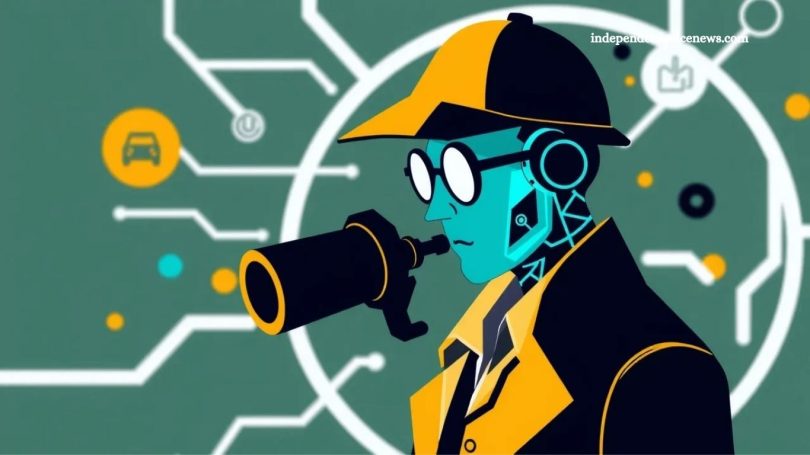

AI Adoption is reshaping the legal industry, and one boutique law firm in Dallas is demonstrating just how powerful the technology can be for small businesses willing to embrace it.
At Lynn Pinker Hurst & Schwegmann, partner Chris Schwegmann is taking an innovative approach—inviting AI tools to think like Supreme Court Chief Justice John Roberts or even fictional detective Sherlock Holmes. His goal? To free up time, boost strategic thinking, and give his firm a competitive edge without replacing human talent.
Creative Use of AI in Legal Strategy
Unlike many firms that use AI solely for data retrieval or drafting basic documents, Schwegmann pushes the boundaries. By uploading opposing counsel’s briefs into the AI legal platform Harvey, he prompts it to adopt the perspective of revered legal minds like Chief Justice Roberts. Sometimes, he even asks it to think like Sherlock Holmes to unlock unconventional insights.
“Harvey, ChatGPT — they know who those folks are, and can approach the problem from that mindset,” Schwegmann said.
This creative strategy generates novel ideas that—when filtered through legal judgment—can solve complex legal challenges. It’s a blend of art and science that’s proving valuable in trial litigation.
Read More: FedEx Surpasses Earnings Estimates, Projects $1 Billion in Cost Savings Next Year
Small Businesses and the AI Gap
Despite Schwegmann’s success, most small businesses have yet to adopt AI. According to the National Federation of Independent Business (NFIB), only 24% of small business owners report using AI tools like ChatGPT, Canva, or Copilot.
Even more striking, 98% of AI adopters say the technology hasn’t reduced staff numbers. Instead, it’s serving as an accelerator—helping teams accomplish more in less time.
For Schwegmann’s firm of 50 attorneys, this means AI completes tasks in days that previously took weeks. Junior lawyers spend less time on tedious assignments, and senior partners now have more availability to mentor rising talent.
Leveling the Legal Playing Field
Schwegmann highlights how AI is removing long-standing inequalities in litigation. Large firms often overwhelm smaller firms with excessive filings—a strategy known as “papering you to death.” But AI has changed that dynamic.
“Harvey lets us review, understand, incorporate, and respond much faster than we would prior to these tools,” Schwegmann said. “No longer does a party have an advantage because they can drown us in paperwork.”
AI Adoption by Business Size
The NFIB survey revealed a clear trend: AI adoption rises with business size.
- Only 21% of businesses with fewer than 10 employees use AI.
- Nearly 50% of businesses with 50 or more staff have adopted it.
The takeaway? Smaller firms are at risk of falling behind unless they begin experimenting with AI integration.
The Future of AI in Small Business
Looking ahead, 63% of small employers believe AI will play an important role in their industry over the next five years. While 12% view it as extremely important, 15% still dismiss its future relevance entirely.
Common use cases for AI in the small business world include:
- Marketing and advertising
- Customer service automation
- Predictive analytics
- Internal communications
These tools aren’t replacing people—they’re enhancing productivity and enabling smarter decision-making.
Human Judgment Still Matters
Despite AI’s growing role, Schwegmann insists it doesn’t replace the legal team—it enhances them.
“We still have the need for the independent legal judgment of our associate lawyers and our partners. It hasn’t replaced them; it augments their thinking.”
This augmentation allows more time for what lawyers do best: strategy, analysis, and creative problem-solving.
National Trends Mirror Legal Innovation
The NFIB’s findings align with a recent study by Reimagine Main Street, a project from the Public Private Strategies Institute in partnership with PayPal.
Their survey of 1,000 small businesses (with annual revenues between $25,000 and $50,000) found that one in four had already incorporated AI into their workflows—mirroring the adoption rate seen in the NFIB survey.
Frequently Asked Questions
What AI tools is Chris Schwegmann using?
He primarily uses the legal AI platform Harvey and also experiments with ChatGPT.
Is AI replacing jobs at Lynn Pinker Hurst & Schwegmann?
No. AI is streamlining tasks, not replacing employees. It allows lawyers to focus on more strategic work.
Why does Schwegmann ask AI to think like famous figures?
Adopting the mindset of iconic thinkers like John Roberts or Sherlock Holmes helps generate unique legal insights.
What is the main benefit of AI for small law firms?
AI reduces the time spent on routine tasks, allowing smaller firms to compete with larger firms on a more equal footing.
How common is AI use among small businesses?
Only 24% of small businesses currently use AI, but that number is expected to grow significantly in the next five years.
Does using AI reduce staff at most firms?
According to the NFIB survey, 98% of businesses using AI have not reduced staff as a result.
What types of tasks does AI handle in small businesses?
Common tasks include marketing, customer service, internal communications, and data analysis.
Can AI improve mentorship and career development?
Yes. By automating routine work, senior professionals have more time to mentor junior team members.
Conclusion
Chris Schwegmann’s law firm is proving that small firms don’t need massive resources to innovate. By using AI creatively and strategically, they’ve improved efficiency, enhanced creativity, and rebalanced the competitive landscape.
For small businesses across all sectors, the message is clear: AI isn’t the future—it’s the present. And those willing to embrace it will be better positioned to grow, compete, and thrive in a rapidly evolving marketplace.