
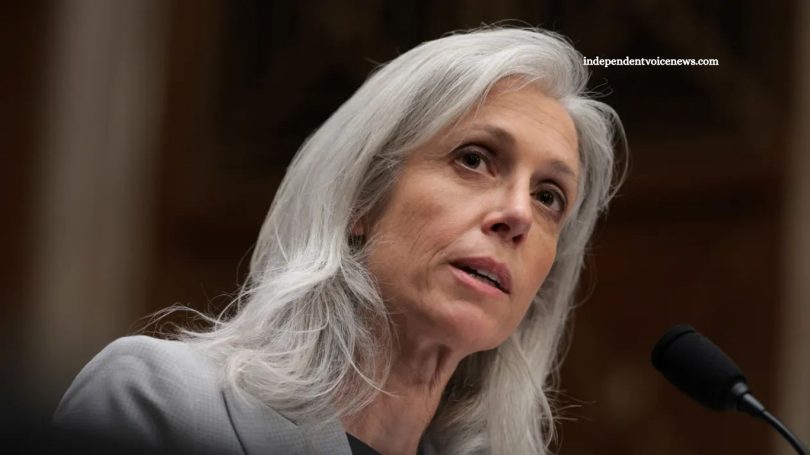

The White House confirmed on Wednesday that it had dismissed Centers for Disease Control and Prevention (CDC) Director Susan Monarez after she refused to resign. In a major shakeup at the agency, four other senior CDC officials also announced their resignations, marking a period of unprecedented leadership turmoil.
Leadership Crisis at the CDC
The crisis unfolded on the same day the Food and Drug Administration (FDA) introduced new limits on eligibility for the latest round of COVID-19 vaccines in the United States. The announcement added pressure on the CDC amid growing scrutiny of its policies and internal operations.
White House spokesperson Kush Desai issued a statement to NBC News, saying, “Susan Monarez is not aligned with the President’s agenda of Making America Healthy Again. Since Susan Monarez refused to resign despite informing Health and Human Services leadership of her intent to do so, the White House has terminated Monarez from her position with the CDC.”
Read More: Trump Administration Cuts Another $175 Million from California High-Speed Rail Project
Monarez Challenges Political Pressure
Earlier in the day, attorney Mark Zaid, representing Monarez, stated that she had not been fired and had no intention of stepping down. He emphasized that her refusal to resign stemmed from a commitment to public health.
“When CDC Director Susan Monarez refused to rubber-stamp unscientific, reckless directives and fire dedicated health experts, she chose protecting the public over serving a political agenda,” Zaid said. “For that, she has been targeted.”
Official Confirmation of Departure
The Department of Health and Human Services (HHS) confirmed Monarez’s removal via a post on X, noting simply that “Monarez is no longer director” of the CDC. Her departure marks a significant moment for the agency, which has faced growing political and operational pressures in recent months.
Background on Susan Monarez
Monarez, a longtime federal scientist, was sworn in as CDC director on July 31. She became the first director confirmed by the Senate following a law passed during the pandemic requiring congressional approval for the role. Her tenure, though brief, was marked by controversy and debate over public health priorities.
The Washington Post first reported her ousting on Wednesday, highlighting the swift nature of the decision.
Resignations of Senior CDC Officials
Alongside Monarez’s departure, at least four other top CDC officials resigned, intensifying the leadership vacuum:
Dr. Debra Houry, Chief Medical Officer
- Dr. Demetre Daskalakis, Director of the National Center for Immunization and Respiratory Diseases
- Dr. Daniel Jernigan, Director of the National Center for Emerging and Zoonotic Infectious Diseases
- Dr. Jennifer Layden, Director of the Office of Public Health Data, Surveillance, and Technology
In her resignation letter, Dr. Houry cited the growing dangers of vaccine misinformation and expressed concern that budget cuts and agency reorganization would impair the CDC’s ability to address chronic diseases such as hypertension, diabetes, cancer, overdoses, and mental health conditions.
Dr. Daskalakis echoed these concerns, stating in his resignation letter that he was leaving due to the “ongoing weaponizing of public health.”
Turbulent Times for the CDC
Monarez’s exit comes amid heightened challenges for the agency. Earlier this month, a gunman attacked the CDC’s Atlanta headquarters, resulting in the death of a police officer. The incident prompted urgent discussions about workplace safety and security for CDC employees.
Monarez canceled a meeting with CDC staff scheduled for the following Monday, according to an email obtained by NBC News. She explained that the decision was made to ensure staff could regain confidence in the agency’s safety and security protocols.
Presidential Nomination and Controversy
President Donald Trump nominated Monarez after withdrawing his first CDC nominee, former Republican Congressman Dave Weldon, hours before his confirmation hearing. Weldon faced criticism for his views on vaccines, adding to the political sensitivities surrounding the agency’s leadership.
Monarez’s short tenure, combined with the simultaneous resignations of senior officials, leaves the CDC navigating both operational disruptions and public scrutiny at a critical time for U.S. public health.
Implications for Public Health
The mass departure of leadership at the CDC raises significant concerns about the agency’s capacity to handle ongoing health threats, including COVID-19, influenza, and emerging infectious diseases. Experts warn that such instability may undermine public confidence in the nation’s primary health protection agency.
Analysts also point to potential delays in vaccine rollout, research initiatives, and disease surveillance, as the agency adjusts to new leadership and internal restructuring. This upheaval coincides with broader debates over federal health policy and the role of science in decision-making.
Frequently Asked Questions
Why was CDC Director Susan Monarez fired?
The White House stated that Monarez was not aligned with the President’s health agenda and refused to resign despite being asked. Her attorney claims she was targeted for prioritizing scientific integrity over political directives.
When did Susan Monarez become CDC director?
Monarez was sworn in on July 31, making her the first CDC director confirmed by the Senate under a law requiring congressional approval for the role.
How does this impact the CDC’s operations?
The mass resignations create leadership gaps that could slow disease surveillance, vaccine rollout, and public health initiatives. Experts warn this may undermine public confidence in the CDC.
What triggered the recent shakeup at the CDC?
The shakeup coincided with new FDA restrictions on COVID-19 vaccines and ongoing political pressures on the agency. Other contributing factors include concerns over agency reorganization, budget cuts, and the aftermath of a recent attack on the Atlanta headquarters.
Who will lead the CDC now?
The White House and HHS have not yet announced an interim or permanent replacement. Leadership plans are expected to be communicated in the coming days.
Was Monarez’s removal politically motivated?
Her attorney and some CDC insiders suggest her firing was politically motivated due to her refusal to follow directives they deemed unscientific. The White House cites alignment with the President’s agenda as the official reason.
How has the CDC responded internally?
Monarez canceled a planned staff meeting to focus on restoring trust in workplace safety following a recent shooting at CDC headquarters. The resignations reflect deep internal concerns about agency direction and morale.
Conclusion
The firing of CDC Director Susan Monarez and the simultaneous resignations of four senior officials mark an unprecedented leadership crisis at the nation’s premier public health agency. These departures underscore the tension between political directives and scientific integrity, raising concerns about the CDC’s ability to manage ongoing public health challenges, including COVID-19, chronic diseases, and emerging threats.