
The United Kingdom, alongside 27 other countries, has issued a joint statement demanding an immediate end to the ongoing war in Gaza. Citing unprecedented levels of civilian suffering, the group has strongly condemned Israel’s approach to humanitarian aid and its military conduct, particularly the killing of civilians seeking food and water.
Strong International Condemnation
The statement—signed by foreign ministers from nations including Australia, Canada, France, Italy, Japan, New Zealand, and Switzerland—accuses the Israeli government of implementing a “dangerous” and “inhumane” aid distribution model. It also denounces the “drip feeding” of humanitarian assistance and highlights the increasing death toll among civilians, including children, who are attempting to access life-sustaining resources.
“The war in Gaza must end now,” the joint declaration asserts. “The suffering of civilians has reached new depths. Israel’s aid delivery system fuels instability and strips Gazans of their dignity.”
Foreign Secretary David Lammy addressed the UK Parliament following the release, describing a “litany of horrors” occurring in Gaza, including the deaths of starving children from military strikes. Although reaffirming his support for Israel’s right to exist and defend itself, Lammy warned that its current actions were “doing untold damage to Israel’s global standing and long-term security.”
Read More: Israeli Forces Kill 67 Palestinians Seeking Aid in Northern Gaza: Hamas-Run Ministry
Deaths Mounting Near Aid Sites
The condemnation follows several deadly incidents near aid distribution centers. Gaza’s health ministry, run by Hamas, reported over 100 Palestinian deaths over the weekend due to Israeli fire targeting civilians awaiting food. Additionally, at least 19 individuals died from malnutrition, with warnings of mass starvation looming.
On Saturday alone, 39 people were killed near aid distribution points operated by the Gaza Humanitarian Foundation (GHF) in Khan Younis and Rafah. The Israeli military said it had fired warning shots to deter what it called “suspects,” disputing the reported casualties. On Sunday, 67 more civilians reportedly died after surging toward a UN aid convoy in northern Gaza. The military again claimed it was responding to an “immediate threat.”
The World Food Programme responded, stating that hunger in Gaza has reached “new levels of desperation,” with more than 90,000 women and children requiring urgent nutritional care.
Aid System Under Fire
The controversy centers on the new aid distribution model supported by Israel and the U.S., created to bypass the United Nations. This system, operated by the GHF and private U.S. security contractors, distributes food from military zones within Gaza. While Israel claims it prevents aid from being seized by Hamas, the UN and several humanitarian organizations refuse to participate, citing violations of humanitarian principles like neutrality and safety.
The UN Human Rights Office has reported 674 deaths near GHF distribution points since they began operating eight weeks ago. An additional 201 fatalities have occurred along aid convoy routes, raising alarm about the systemic dangers of current delivery mechanisms.
Israel’s foreign ministry dismissed the international criticism as “disconnected from reality,” blaming Hamas for both the war’s continuation and alleged misinformation about aid distribution. “Instead of agreeing to a ceasefire, Hamas is running a campaign to spread lies about Israel,” said Israeli spokesperson Oren Marmorstein. “It deliberately acts to increase friction and harm civilians who come for aid.”
Alarming Humanitarian Crisis
Inside Gaza, the humanitarian crisis is rapidly deteriorating. Hospitals are overwhelmed and under-resourced. According to Dr. Khalil al-Daqran of al-Aqsa Hospital in Deir al-Balah, staff and patients are suffering from extreme hunger, with no baby formula or basic nutrition available.
“Hospitals can’t offer a single bottle of milk to children. Staff are physically unable to continue due to starvation,” said Dr. al-Daqran. Local markets have also shuttered amid food shortages, pushing prices to exorbitant levels. One Gaza resident, Mohammad Emad al-Din, described his children crying from hunger, surviving on a single plate of lentils over three days. “A kilogram of flour cost $80 last week,” he told the BBC.
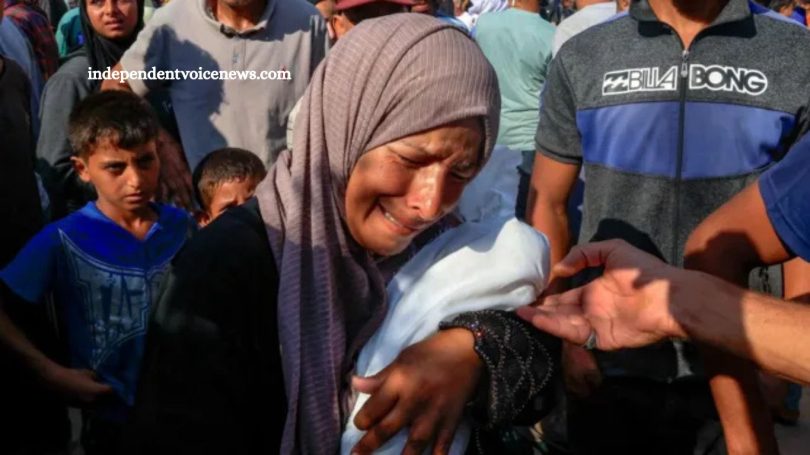
Tragic images from southern Gaza reveal the human toll. At Nasser Hospital, medics confirmed that three-month-old Yehia al-Najjar died from severe malnutrition. His mother, Alaa al-Najjar, mourned the infant as another symbol of Gaza’s mounting starvation crisis.
Questionable Displacement Plans
The international statement also criticizes Israeli proposals to relocate Gaza’s 2.1 million residents into a so-called “humanitarian city” in Rafah. Labeling it as a form of “permanent forced displacement,” the signatories argue it breaches international humanitarian law.
“Such proposals are unacceptable,” the joint declaration states. “Permanent forced displacement violates the Geneva Conventions and is not a solution.”
The statement calls on all parties—Israel, Hamas, and the broader international community—to pursue an “immediate, unconditional and permanent ceasefire” and work toward a sustainable political resolution. The foreign ministers further warned that their governments are prepared to “take further action” in pursuit of peace and security. Though not explicitly mentioned, this is widely interpreted as a signal that more countries may formally recognize a Palestinian state.
Israeli Response and Continued Tensions
The Israeli military acknowledged civilian harm in some cases and claimed to be working to reduce friction between its forces and the civilian population. COGAT, the military body overseeing aid coordination, stated on Monday that Israel “acts in accordance with international law” and continues to lead efforts to facilitate humanitarian access.
Meanwhile, the GHF has criticized UN agencies for failing to cooperate and accused them of allowing supplies to rot at border crossings. GHF spokesperson Chapin Fay claimed that hundreds of truckloads of aid remained unused due to UN inaction.
Israel’s foreign ministry added that 700 trucks filled with aid were currently waiting for UN pickup at border crossings, placing the blame for delays on the international bodies.
The UN, however, cited Israeli restrictions, ongoing hostilities, and fuel shortages as reasons for their inability to safely collect and distribute the supplies. Humanitarian agencies argue that operating under military control jeopardizes their mission and violates essential principles.
War’s Origins and Ongoing Impact
The Gaza conflict erupted on October 7, 2023, following a deadly Hamas-led assault on southern Israel that killed approximately 1,200 people and resulted in 251 hostages being taken. In retaliation, Israel launched a sweeping military campaign aimed at dismantling Hamas’s infrastructure in the Gaza Strip.
Since the start of the war, Gaza’s health ministry reports that over 59,000 people have been killed. The staggering civilian death toll has drawn widespread condemnation and prompted growing calls for a ceasefire from both humanitarian organizations and governments worldwide.
Despite repeated negotiations, ceasefire efforts remain stalled. Hostage release deals have faltered, and violence continues to escalate, with civilians bearing the brunt of the conflict.
Global Calls for Change
The growing chorus of international voices demanding an end to the war marks a turning point in global diplomatic pressure on Israel. As the humanitarian crisis deepens and aid delivery remains fraught with danger, foreign governments are reassessing their positions, with some signaling stronger diplomatic actions if the situation persists.
For millions of Gazans trapped in a war zone, the statements offer little immediate relief. Yet, they reflect a shifting global consensus: the current approach is unsustainable, and without urgent, coordinated action, the suffering will only intensify.
Frequently Asked Questions
Why did the UK and 27 other countries condemn Israel?
The UK and 27 other nations condemned Israel for the alleged inhumane killing of Gaza civilians seeking food and water. Their joint statement criticized Israel’s aid delivery model and called for an immediate ceasefire to end civilian suffering.
Which countries joined the UK in condemning Israel’s actions in Gaza?
Countries that signed the joint condemnation include Australia, Canada, France, Italy, Japan, New Zealand, Switzerland, and others—totaling 28 foreign ministers from democratic nations.
What does the joint statement say about humanitarian aid in Gaza?
The statement denounces Israel’s “drip feeding” of humanitarian aid and describes the current distribution system as dangerous and undignified, citing hundreds of deaths near aid delivery sites.
How has Israel responded to the international criticism?
Israel’s foreign ministry rejected the statement, calling it “disconnected from reality.” It accused Hamas of spreading misinformation and being responsible for both the war and the delays in humanitarian aid.
What is the Gaza Humanitarian Foundation (GHF)?
The GHF is a new aid distribution system supported by Israel and the U.S., using private contractors. The UN and several humanitarian organizations oppose it, claiming it violates neutrality and safety standards.
What is the current humanitarian situation in Gaza?
Gaza is experiencing a severe hunger crisis. Reports indicate widespread malnutrition, with children and infants dying from starvation. Hospitals are overwhelmed, and food prices have skyrocketed.
Has the UN supported the new aid system in Gaza?
No. The UN and partner organizations have refused to participate in the new GHF-led aid system, citing safety concerns and breaches of international humanitarian principles.
Conclusion
The joint condemnation by the UK and 27 other nations marks a significant escalation in international pressure on Israel to change its approach in Gaza. With rising civilian deaths, including those seeking basic necessities like food and water, the global community is calling for an immediate ceasefire and a return to humanitarian principles. While Israel defends its actions as necessary for national security and blames Hamas for prolonging the conflict, the growing death toll and deepening humanitarian crisis have drawn sharp criticism.