
Grant Hardin, the former police chief known as the “Devil in the Ozarks,” executed a carefully planned escape from an Arkansas prison in May 2025, exploiting lax security in the prison kitchen where he worked. According to an Arkansas Department of Corrections report, Hardin spent six months preparing for the breakout, creating a fake law enforcement uniform and gathering supplies undetected.
His escape exposed multiple procedural failures, including unsupervised access to restricted areas and a misclassified custody level. Authorities recaptured Hardin just over a mile from the prison after an extensive search involving dogs, drones, and helicopters, highlighting both his planning and the prison’s security lapses.
Hardin Recaptured Near the Prison
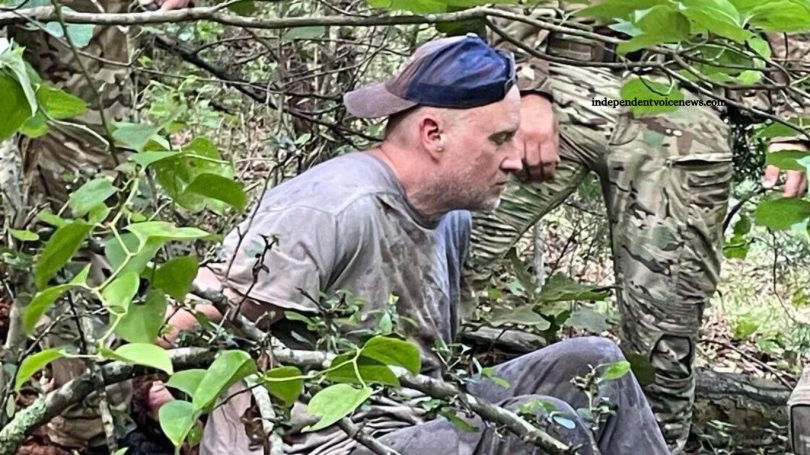
Authorities apprehended Hardin on June 6, just a short distance from the prison. Tracking dogs followed a trail about 1.5 miles west of the North Central Unit. Initially, officials feared Hardin may have fled the state.
The search involved canines, drones, and helicopters, complicated by heavy rain and rugged terrain. Hardin reportedly escaped while wearing an outfit he crafted to resemble a law enforcement uniform.
Read More: Florida Couple 10-Week Romance Ended by Murder 8 Years Later
Escape Planning and Method
Hardin, who worked in the prison kitchen, spent six months preparing for his breakout. He admitted using black Sharpie markers and laundry found in the kitchen to assemble the disguise, fashioning a fake badge from a can lid.
According to the report, Hardin hid the clothes and other necessary items in the bottom of a trash can, noting that the kitchen staff never conducted thorough searches. He built a ladder from wooden pallets in case he needed to scale the prison fence, though it went unused.
“Hardin stated when he walked up to the gate, he just directed the officer to ‘open the gate,’ and he did,” the report said.
Staff Violations and Disciplinary Actions
Two employees were fired for procedural failures that directly contributed to Hardin’s escape. One was a kitchen worker who allowed unsupervised access to a back dock, while the other was a tower guard who unlocked a gate without confirming Hardin’s identity.
Several additional employees faced suspensions, and one was demoted. The report highlighted that the kitchen staff were “very lax on security,” enabling Hardin to prepare his escape without assistance from staff or other inmates.
Survival After Escape
Following his breakout, Hardin survived in the wilderness using food smuggled from the prison and distilled water from his CPAP machine. He also drank creek water and ate berries, bird eggs, and ants.
“He said his plan was to hide in the woods for six months if need be and begin moving west out of the area,” the report said.
Hardin’s Criminal Background
Hardin previously served as the police chief of Gateway, Arkansas, and was featured in the TV documentary Devil in the Ozarks. He pleaded guilty to first-degree murder for the 2017 fatal shooting of 59-year-old James Appleton, receiving a 30-year sentence.
While serving that sentence, police matched his DNA to a 1997 rape case. He pleaded guilty to two counts of rape in 2019 and was sentenced to 25 years for each conviction.
Investigations and Legislative Oversight
Hardin’s escape prompted two separate reviews, including one by the Arkansas State Police. A legislative subcommittee has also been holding hearings.
Republican State Rep. Howard Beaty, co-chair of the Legislative Council’s Charitable, Penal, and Correctional Institutions Subcommittee, indicated the panel plans to review both reports at a hearing next month.
State Sen. Ben Gilmore criticized the department’s review for focusing on the final failure rather than systemic issues that enabled the escape.
Early Confusion and Misclassification
The ADC report noted confusion during the early stages of the escape, particularly regarding which law enforcement agencies were notified.
Hardin had also been misclassified and should not have been held at a primarily medium-security prison. He was subsequently transferred to a maximum-security facility. Hardin has pleaded not guilty to escape charges, with trial scheduled for November.
Security Reforms Following Escape
The ADC has implemented several reforms since Hardin’s escape. These include removing electric locks from gates to prevent unsupervised exits and installing additional cameras to cover blind spots, including the dock Hardin used.
The report also recommends that future contraband searches include mechanical rooms and side rooms to prevent similar escapes.
Frequently Asked Questions
Who is Grant Hardin?
Grant Hardin, known as the “Devil in the Ozarks,” is a former police chief from Gateway, Arkansas. He was convicted of first-degree murder and two counts of rape and was serving multiple prison sentences when he escaped in May 2025.
How did Grant Hardin escape from prison?
Hardin planned his escape for six months, using lax security in the prison kitchen to gather supplies. He created a fake law enforcement uniform, hid items in a trash can, and walked out through an unlocked gate.
When and where did the escape occur?
Hardin escaped from the Calico Rock prison in Arkansas on May 25, 2025. He was recaptured on June 6, roughly 1.5 miles from the prison.
How was Hardin captured?
Authorities used tracking dogs, drones, and helicopters to search the area. Hardin was apprehended a short distance from the prison after surviving in the wilderness on smuggled food, creek water, and wild edibles.
Were prison staff disciplined after the escape?
Yes. Two employees were fired for procedural violations, several others were suspended, and one was demoted. Failures included unsupervised access to a back dock and unlocking a gate without confirming Hardin’s identity.
What security weaknesses allowed the escape?
The report highlighted several weaknesses, including lax kitchen security, blind spots on the back dock, misclassified custody levels, and failures to conduct thorough shakedown searches.
What is Hardin’s criminal background?
Hardin pleaded guilty to the 2017 murder of James Appleton and received a 30-year sentence. He also pleaded guilty to two counts of rape in 2019, receiving 25-year sentences for each count.
Conclusion
Grant Hardin’s escape from the Calico Rock prison exposed serious lapses in Arkansas prison security and highlighted systemic issues in inmate classification and staff oversight. Despite meticulous planning, he was recaptured shortly after fleeing, underscoring the effectiveness of coordinated law enforcement efforts. In response, the Arkansas Department of Corrections has implemented security reforms, including additional cameras, gate lock changes, and improved contraband search procedures.