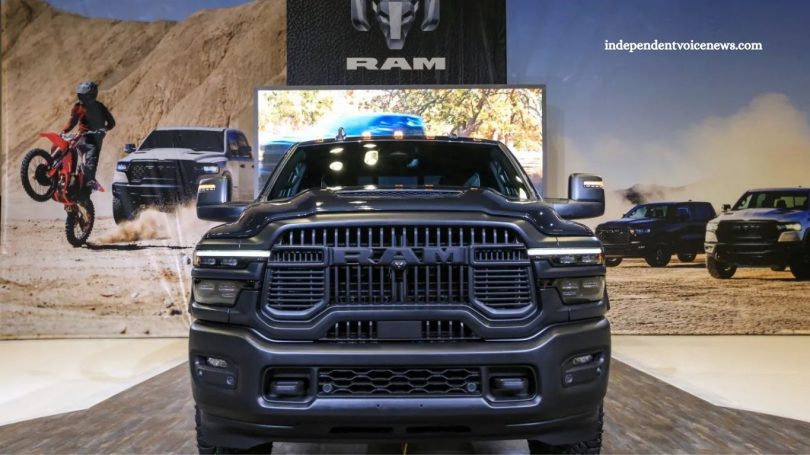

AUBURN HILLS, Mich. — Ram CEO Tim Kuniskis returned from a seven-month retirement last year, driven by a passion to revive a struggling brand losing ground to rivals.
At a media event, Kuniskis walked on stage to Eminem’s “Guess Who’s Back,” signaling his comeback and unveiling an aggressive plan to reboot Ram Trucks through 2026.
The strategy includes over 25 initiatives, such as reentering NASCAR with mechanical bull rides and a new race truck, reviving Hemi V-8 engines under a “Symbol of Protest,” and launching a class-leading powertrain warranty.
Reenergized since his return after a leadership shake-up, Kuniskis says he’s “flying without a parachute,” using his second chance to overhaul a brand that’s seen a 38% sales drop since its 2019 peak. “I didn’t need to leave—just a break. Now I’m ready,” he told CNBC from his minimalist office, stripped of mementos given away at retirement. “We see a real window to fix things. Some fear it; our team thrives on it.”
Ram’s decline, Kuniskis noted, stems from pricing missteps, poor product launch timing, and complications with the redesigned Ram 1500—whose production issues persist more than a year after launch. “We tried to change everything at once,” he said. “We should’ve phased it.”
Kuniskis did not address broader challenges under former Stellantis CEO Carlos Tavares, who departed in December. His return aligns with a new chapter for Stellantis and a renewed push for Ram’s turnaround.
Turnaround plan

Ram ranks among Stellantis’ most vital brands, especially in the high-margin full-size pickup segment. Its performance plays a critical role in Stellantis’ efforts to reclaim ground in the commercial vehicle market.
“It’s the backbone of their business,” said Joseph Yoon, consumer insights analyst at Edmunds.com, a CarMax-owned site. “Maintaining market share is crucial.”
Ram 1500’s U.S. market share has dropped sharply—from 17.8% in 2019 to just 8.4% in the first half of this year, according to Edmunds.
Read More: Nike Stock Jumps 17% as CEO Signals Imminent Recovery
Market share for the 5 bestselling trucks in the U.S.
Ram’s full-size truck sales, including the 1500 and heavy-duty models, have dropped 41% from 2019 to 2024, according to company data. Meanwhile, competitors like General Motors and Toyota have gained market share.
Though early in its turnaround plan, Ram has already made bold moves: reviving the popular Hemi V-8 engine, reintroducing budget-friendly truck models, launching a 10-year/100,000-mile powertrain warranty, and returning to NASCAR. The plan runs through next year.

CEO Tim Kuniskis hinted at more to come, including a midsize pickup expected by 2027 and possibly a passenger van. He also rolled out the “Nothing Stops Ram” campaign and delayed electrified pickups due to weak demand.
“There’s always a business reason behind the fun,” Kuniskis said. One example: a mechanical bull named “Ride the Hemi,” styled after the brand’s new “Symbol of Protest” logo. Fans who last 15 seconds win a limited-edition T-shirt. The NASCAR relaunch in Michigan featured the new race truck and stunt burnouts.

While Kuniskis won’t share sales targets, he aims for a 20% to 29.9% market share in full-size trucks by the end of the plan. Ram’s 2024 share stood at about 17%. Still, he emphasizes profit and plant utilization over share alone. Retail sales, a key metric, are projected to rise 28% in the first half of 2024.
“You don’t chase share just to chase it,” Kuniskis said. “I want every plant running at full capacity.”
‘Last Tenth LFG’
Kuniskis wears a black wristband with white lettering: “Last Tenth LFG.” The phrase reflects his leadership mantra—pushing beyond expectations—and the acronym “LFG” stands for “Let’s Freaking Go,” among other meanings.

“It’s not about just getting an ‘A,’” Kuniskis said. “People remember the ones who go further and do something different—who push that last tenth.”
He distributed the wristbands to team members and dealers at January’s annual conference to rebuild trust after years of tension over pricing, incentives, and product decisions. So far, the gesture is resonating.
“Everything Tim’s shown us signals the brand is heading back toward its former volume levels,” said Michael Bettenhausen, an Illinois dealer and chair of the Stellantis National Dealer Council. “It’s remarkable—he’s the right leader for this comeback.”
Dealers see full-size pickups as vital to Stellantis’ success. These trucks often inspire deep customer loyalty, passed down through generations.

“Brand loyalty drives this market,” said Edmunds analyst Joseph Yoon. “For many buyers, it’s not about the best specs—it’s about what feels right for them.”
The return of the iconic Hemi V-8 appears to be paying off, with 12,000 dealer orders placed on day one. However, Ram’s electrification plans face delays. The all-electric pickup, expected last year, remains on hold. A plug-in hybrid (EREV) will enter production this year, though sales timing remains unclear.
Kuniskis believes the EREV will play a bigger role in Ram’s revival through 2026.
“I’m bullish on this year,” he said. “We’ve only used traditional tactics so far—the new stuff’s still to come.”
Frequently Asked Questions
What is Stellantis’ strategy to revive the Ram Trucks brand?
Stellantis is implementing a multi-year plan focused on product innovation, branding, and customer engagement. Key moves include bringing back the iconic HEMI V-8 engine, launching aggressive new warranty programs, and reintroducing performance and affordability to the Ram lineup.
Why is Stellantis bringing back the HEMI V-8 engine?
The HEMI V-8 is a fan favorite known for its power and durability. Stellantis revived it under a campaign called the “Symbol of Protest,” positioning it as a bold move against current industry trends favoring electrification.
What’s the significance of the mechanical bull ride in Ram’s marketing?
The mechanical bull—nicknamed “Ride the HEMI”—is a marketing stunt symbolizing Ram’s rugged, untamed spirit. It appears at public events and dealership launches to generate buzz and engage loyal truck enthusiasts.
How have Ram Trucks sales changed in recent years?
Ram’s sales have dropped about 38–41% since their 2019 peak, largely due to pricing missteps, product launch issues, and increased competition. Stellantis is now focused on regaining market share.
What other bold moves has Stellantis made for Ram?
Beyond the HEMI return, Stellantis introduced a 10-year/100,000-mile powertrain warranty, reentered NASCAR with a new race truck, and previewed upcoming models, including a possible midsize pickup and passenger van.
Are Ram’s electric trucks still happening?
Yes, but on a delayed schedule. The all-electric Ram 1500 REV is postponed, while a plug-in hybrid (EREV) version is set to begin production in 2025. Stellantis is pacing electrification based on real consumer demand.
What is the “Nothing Stops Ram” campaign?
This brand refresh highlights Ram’s renewed commitment to power, durability, and bold design. It’s part of Stellantis’ broader plan to reconnect emotionally with customers and energize the dealership network.
Who is leading this turnaround at Ram?
Tim Kuniskis, a seasoned Stellantis executive, returned from retirement to lead Ram’s revival. Known for his product instincts and no-nonsense style, Kuniskis is driving the comeback with bold marketing and leadership.
Conclusion
Stellantis is pulling out all the stops to revive the Ram Trucks brand after years of sales decline. With the return of the iconic HEMI V-8 engine, bold marketing stunts like mechanical bull rides, and a renewed focus on customer trust and dealer support, Ram is clearly positioning itself for a powerful comeback.
Under CEO Tim Kuniskis’ leadership, the brand is blending heritage, innovation, and performance to reclaim its place in the competitive truck market. While challenges remain—especially around electrification—Ram’s bold strategy signals that it’s not just back in the game, but ready to lead it.