
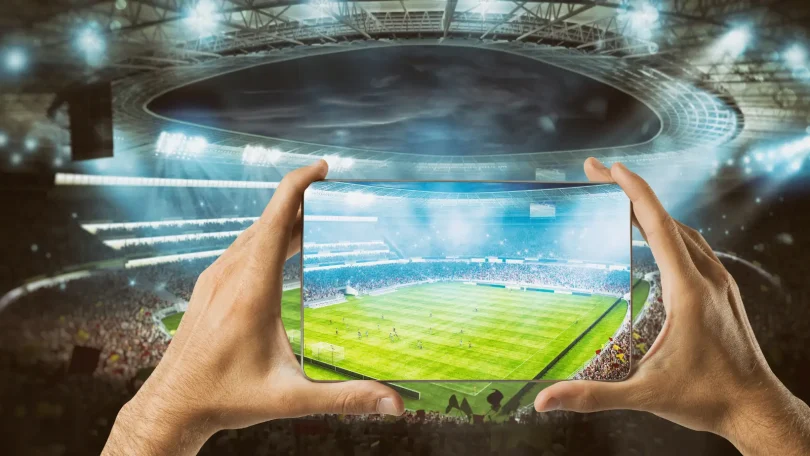

Beyond the Game — The Human Connection
Every match, every goal, and every whistle carries more than just athletic competition — it carries emotion.
The magic of 스포츠 중계 (sports broadcasting) lies not just in showing the game, but in connecting millions of people who may never meet yet feel the same heartbeat.
When a last-minute goal or a dramatic finish unfolds live, people shout, cry, and cheer together — across languages and borders.
It’s not just broadcasting. It’s belonging.
1. From Viewers to Participants
Sports broadcasting used to be one-directional: fans watched, commentators spoke, and that was it.
Today, everything has changed.
Live chats, real-time reactions, and fan polls have transformed the viewing experience into a shared social event.
Fans no longer sit in silence; they engage — with memes, predictions, and instant analysis.
Streaming platforms have effectively turned each viewer into a co-commentator.
It’s not just watching sports; it’s living them together.
2. Global Fandom Without Borders
One of the greatest triumphs of digital broadcasting is the breaking of geographic limits.
A fan in Busan can now celebrate alongside another in Buenos Aires.
Time zones fade when passion synchronizes — everyone watching the same moment, feeling the same adrenaline.
This global interconnection has given rise to new kinds of communities.
Online sports fan groups have become cultural hubs where people share tactics, superstitions, and local sports slang.
스포츠 중계 has evolved from simple viewing to global storytelling.
3. Cultural Bridges Through Broadcasting
Sports are the universal language of emotion — and broadcasting is the translator.
When the Olympics, World Cup, or Asian Games go live, the broadcast isn’t just showing a match; it’s showing cultural expression — national pride, ritual, and history.
Each broadcast becomes a window into other worlds: the chants, the colors, the customs.
Through these shared broadcasts, viewers learn empathy and appreciation for cultures they may never have known otherwise.
In this way, sports broadcasting becomes quiet diplomacy — unity through competition.
4. Real-Time Emotion, Real Human Impact
No entertainment medium can replicate the emotion of a live game.
When millions of people see the same moment — a winning shot, a heartbreak, or a record-breaking run — they create collective memory.
It’s emotional synchronization at a global scale.
Psychologists call this social resonance — the shared feelings that strengthen social bonds.
In a fragmented digital world, these moments of collective awe remind us of our shared humanity.
5. The Rise of Fan Creators
Today’s fans don’t just consume; they create.
Social media has empowered everyday viewers to become broadcasters in their own right — streaming live commentary, reaction videos, or local community coverage.
In doing so, they expand the reach of sports beyond traditional media.
Some of these independent creators now rival professional broadcasters in influence.
They add humor, emotion, and perspective that resonates with younger audiences.
The future of 스포츠 중계 may not belong to corporations — but to communities.
6. The Double-Edged Sword of Accessibility
While digital accessibility connects more people, it also introduces challenges.
Instant streaming means spoilers spread fast, and online toxicity can sometimes overshadow the joy.
Responsible community design — moderation, respectful chat culture, and viewer education — is essential for keeping broadcasts inclusive and positive.
When audiences remember that behind every username is a human being, the broadcast becomes not just entertaining, but enlightening.
7. Brands, Fans, and the New Economy of Emotion
Sports broadcasting is no longer just a media business — it’s an emotion economy.
Brands no longer compete for screen time; they compete for emotional moments.
The best sponsors and advertisers understand this — they support storytelling, not interruptions.
When handled ethically, partnerships can elevate the experience, funding better coverage and innovative viewing options without compromising authenticity.
The most successful brands now behave like fans themselves — cheering, celebrating, and engaging.
8. The Future: Shared Screens, Shared Souls
The next era of sports broadcasting won’t just improve quality — it will deepen connection.
Imagine:
- AI-powered translations allowing instant multilingual commentary.
- Virtual stadiums where fans from all continents watch together.
- Emotional AI reacting to fan excitement in real time.
The future isn’t about more pixels — it’s about more presence.
We won’t just see the game; we’ll feel it together, across cultures and screens.
Final Thoughts
Sports broadcasting has always been about more than sport — it’s about shared humanity.
Through 스포츠 중계, the world becomes smaller, kinder, and more connected.
In every shout, every cheer, and every replay, we rediscover what unites us: passion, pride, and the joy of being part of something larger than ourselves.